

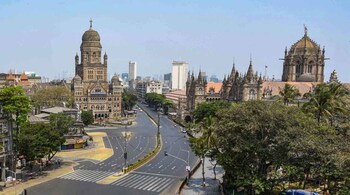
As Maharashtra battles with the new COVID-19 wave, the state government on April 13 announced a 15-day-long 'Break the Chain' restrictions entailing stricter curbs on public activities.
Amid wide speculations of a lockdown, Chief Minister Uddhav Thackeray said the curfew, which excludes essential services, will come into effect at 8 pm on April 14 and remain in force till 7 am on May 1. All non-essential services will remain barred during the period.
Track this LIVE blog for the latest updates on the coronavirus pandemic
Here are the answers to some key questions on Maharashtra's new COVID-19 guidelines
What restrictions have been imposed?
Section 144 of the Criminal Procedure Code (CrPC), dealing with gatherings and assembly of people, has been imposed in the state. This means that no more than five persons can move together or gather in public places.
All essential services, including medical stores hospitals, supply of medicines, among others will remain operational. The local transport will also function for those involved in essential services.
Additionally, no individual will be allowed to move in public places without a valid reason.
What comes under the essential services category?
Besides hospitals and medicals, a range of other essential services will remain out of the purview of the curfew. These include services such as vaccination, oxygen production, home delivery of food, operation of e-commerce firms, all banking and financial services, RBI and its affiliated offices, insurance offices and pre-monsoon works will remain operational.
Work at construction sites with residential facilities and industrial activities, where accommodation or transportation of personnel is available, will remain unaffected.
Read | New COVID guidelines issued for Maharashtra; check out what's allowed, what's not
Petrol pumps, petroleum-related products, cargo services, data centres/cloud service providers/IT services supporting critical infrastructure and services, government and private security services, vegetable and fruit shops also come under essential services.
Will malls and markets remain open?
No. Only shops dealing with essential products will be allowed to remain open.
Is public transport open?
Public transport will remain fully functional. However, those will be available for people working in essential services. Besides, restrictions have been imposed on the number of passengers allowed.
Auto: Rickshaw Driver + Two passengers only
Taxi (4 wheelers): Driver + 50 percent vehicle capacity as per RTO
Bus: Full seating occupancy as per RTO passing.
Can we travel via private vehicle?
Private vehicles can ply only for emergency or essential services. Any violation will invite a penalty of Rs 1,000.
Will weekend lockdown continue?
Yes. The fresh curbs build on the existing weekend and night curfews in the state.
Will restaurants remain open?
All restaurants will remain open. However, dine-in has been prohibited and people can opt for take away or home delivery services.
What about street food vendors?
Though roadside eateries are allowed to operate, buyers can not consume food on the street, and only take away will be available.
Will private offices remain open?
CM has directed that all private offices, barring those exempted, to remain shut and people in such establishments can continue to work from home.
However, cooperative, PSU and private banks, BSE and NSE, electric supply-related companies, telecom service providers, insurance/mediclaim companies, and pharmaceutical firms’ offices needed for management of production and distribution will be allowed to remain open.
Similarly, government offices will function at 50 percent capacity except those required for COVID-19 response wherein they will work at 100 percent strength as per the decision of the HOD of the department/office.
Will salons, spas and swimming pools remain open?
Schools, colleges, private coaching classes, salons, spas, beaches, clubs, swimming pools, gyms, drama theatres and cinema halls will remain close during the curfew period.
What about Maharashtra’s entertainment industry?
Shooting for films, serials and advertisements will be halted in the state as part of the fresh guidelines to curb coronavirus cases.
Are wedding and other functions allowed?
Wedding functions have been allowed. However, the attendees must be capped at 25. For the funeral, no more than 20 people will be allowed. For political rallies ahead of elections, not more than 200 people can attend an event or 50 percent of the seating capacity of the hall.
The state has announced a complete ban on religious, social, cultural and political functions in the state till May 1.
Click here for Moneycontrol’s full coverage of the coronavirus pandemic
Discover the latest Business News, Sensex, and Nifty updates. Obtain Personal Finance insights, tax queries, and expert opinions on Moneycontrol or download the Moneycontrol App to stay updated!





