

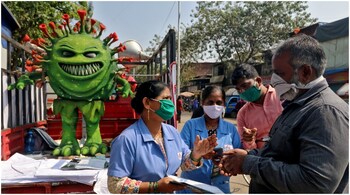
As many as 46,951 new cases of novel coronavirus were reported in India, with total COVID-19 cases now at above 1.16 crore, as per the health ministry’s March 22 update. New cases reported were the highest in the last 130 days.
India reported 212 new deaths (highest in 72 days) and 21,180 new recoveries in the last 24 hours, the latest release shows. More than 4.50 crore vaccinations have been administered across India, according to the March 22 update, with 4,62,157 new vaccinations reported in a day.
Of the total vaccinations administered to date, 83 percent are recipients of their first dose while 17 percent have received the second dose. Among states, Rajasthan has administered the most 4.29 million vaccine doses, followed by Maharashtra (4.28 million) and Uttar Pradesh (4.13 million).
Active cases rose to 3,34,646 with an increase of 25,559 cases on March 22, the highest ever single-day rise. Maharashtra now has the most (2,11,416 or 63 percent) active cases in the country, followed by Kerala (24,928) and Punjab (18,257).
Maharashtra reported the most (30,535 or 65 percent) new cases in the last 24 hours, followed by Punjab (2,644), Kerala (1,875), Karnataka (1,715) and Gujarat (1,580). These five states account for 82 percent of all the new cases reported in India.
Maharashtra also reported the most (99 or 47 percent) new deaths, followed by Punjab (44), Kerala (13), Chhattisgarh (10) and Tamil Nadu (9). These five states account for 83 percent of all the new deaths reported across the country.
About 15 states and union territories did not report any deaths today. These include Andaman and Nicobar, Andhra Pradesh, Arunachal Pradesh, Assam, Dadra and Nagar Haveli/Daman and Diu, Ladakh, Lakshadweep, Manipur, Meghalaya, Mizoram, Nagaland, Sikkim, Tripura and Uttarakhand.
India’s recovery rate further slides to 95.8 percent. Maharashtra recorded 11,314 new recoveries, the most, followed by Kerala (2,251), Punjab (1,331), Karnataka (1,048) and Gujarat (989).
The total number of COVID-19 cases in India is now at 1,16,46,081 with over 1.11 crore recoveries and 1,59,967 deaths as per March 22 update. The mortality rate in the country stands at 1.4 percent with Punjab reporting the highest (3 percent). Less than nine lakh daily tests were reported as of March 21. Total tests done to date were at 23.44 crore.
Despite the high number of cases and deaths reported by India, the country fares better when compared with other nations in terms of per million population.
Discover the latest Business News, Sensex, and Nifty updates. Obtain Personal Finance insights, tax queries, and expert opinions on Moneycontrol or download the Moneycontrol App to stay updated!





