

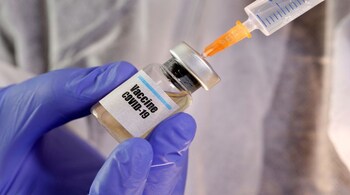
The World Health Organisation (WHO) has announced that eight vaccine candidates for COVID-19 have entered human trials, while another 110 are in various stages of development. There are 30 vaccine projects underway in India and for most, it's a race against time.
With so many vaccines under development, researchers are exploring whether human challenge trials could speed up the development. According to Johns Hopkins COVID-19 tracker, India is close to the 100,000-mark in terms of the number of confirmed cases with over 3,040 deaths.
What is a human challenge trial?
In a human challenge trial, participants are deliberately exposed to the infection (in this case it is SARS-CoV-2 virus), in order to study the disease and test the vaccines. For the human challenge trial - the exact virus strain that will be used to infect the participant and dosage or how much of the virus the volunteers need to be exposed to needs to be determined and approved by the regulatory authorities.
Have human challenge trials been used before?
Human challenge trial isn't new. The method has been used for developing vaccines for seasonal flu, typhoid, malaria, and cholera, among others. In fact, Edward Jenner helped in the development of smallpox vaccine in 1796 by taking samples from a cowpox sore of a milkmaid and put it into the skin of his gardener's eight-year-old son. Jenner then intentionally exposed the child to smallpox, but the child didn't become infected.
Who can volunteer for this trial?
Although more data is needed to clarify relevant risks, WHO guidelines suggest SARS-CoV-2 challenge studies would be least risky for young healthy adults in the age group of 18-30 years. In this age group, hospitalisation rates for COVID-19 are currently estimated to be around 1 percent and fatal infection rates are around 0.03 percent. The challenge trial should be conducted in specialised facilities, with especially close monitoring and ready access to early supportive treatment for participants, including critical care if required.
What are the risks to the volunteers?
According to WHO, SARS-CoV-2 challenge studies may be thought to involve higher levels of risk and uncertainty than other commonly-accepted human challenge studies because the pathogenesis of COVID-19 is currently poorly understood. Also, there is no specific treatment with the recent exception of Remdesivir.
There are ethical questions about subjecting healthy volunteers to a virus that can kill even young and healthy people. Without specific treatment, if a volunteer develops severe illness, the trial progress will be under a cloud.
How is a human challenge trial beneficial?
In the traditional approach, the potential vaccine or placebo will be given to healthy volunteers, who will then be assessed for safety and efficacy through natural or community infection. This takes a lot of time. History suggests the fastest time taken to develop a vaccine has been five years, but it usually takes double that time to bring vaccine from the lab to the market. In a human challenge trial since volunteers are exposed to the virus, it is possible to quickly find out the safety and efficacy of the vaccine, and weed out disappointing vaccine candidates.
How can one enrol for such a trial?
So far, no country has launched a human challenge trial for COVID-19. There is still a lot of scepticism among the scientific community. However, 23,086 volunteers across 102 countries have already signed up on an online register run by the US-based vaccine advocacy group 1DaySooner.
1DaySooner said with human challenge trial the timelines for the vaccine can advance approximately by at least six months. Currently, it is widely-quoted that average timeline for bringing a vaccine for COVID-19 using the conventional system is 18 months.
1DaySooner claimed that advancing the vaccine by even three months could potentially save over half a million lives. In fact, advancing the vaccine by just a day could save 7,120 lives.
Discover the latest Business News, Sensex, and Nifty updates. Obtain Personal Finance insights, tax queries, and expert opinions on Moneycontrol or download the Moneycontrol App to stay updated!





