

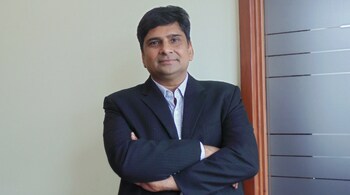
Two years after rolling out their plans, Baroda Mutual Fund and BNP Paribas Mutual Fund formally announced their merger. Here are some edited excerpts from a chat with Suresh Soni, CEO, Baroda BNP Paribas Mutual Fund—the merged entity—on how it would compete and make itself relevant.
Why did it take so long for the merger to go through?
It is mainly because of regulatory approvals. Given the COVID-19 situation, some of the regulatory approvals that we needed were a little slow to come by. Apart from the approval from Securities and Exchange Board of India (SEBI), we needed approval from the competition controller, for foreign direct investment and a few others which took time. We received SEBI approval by January-end. We implemented the exit option for existing investors in February and completed it by early March. And now we complete the process.
Baroda Mutual Fund has consistently been struggling. Its past joint venture with Pioneer was short-lived. Aside from your alliance with BNP Paribas, how serious is Baroda MF in the business? Do you see yourself among the 10 largest fund houses someday?
I do not necessarily agree with the label that it is a struggling fund house. Baroda MF had a joint venture with Pioneer. Pioneer was acquired by Amundi which was already in a joint venture with SBI Mutual Fund. It could not have had two licences. As a result, Pioneer had to exit. And now Baroda and BNP Paribas join hands and we are combining the two teams.
As far as investment performance or business performance is concerned, the headline assets under management (AUM) might appear to be around Rs 12,000-13,000 crore that you have seen in Baroda MF. But within that if you consider the equity and hybrid fund side of the business, then that has grown from about Rs 800 crore five years back to about Rs 6,000 crore now. So our business composition has changed and equity AUM has gone up.
As we merge the two fund houses, it improves our capabilities as well as product suite, which puts us in a good spot to grow from. We intend to build this platform aggressively going forward. And with a customer-centric approach and enhanced investment capabilities, product suite and reach, we would be targeting to be among the top 10 by way of net new flows in the next five years.
Usually PSU bank branches sell their in-house mutual fund’s products only. And anecdotal evidence suggests that they are often mis-sold to unsuspecting customers as products offering returns in excess of fixed deposits. How will you ensure that Bank of Baroda branches don’t do that?
We have a very clear customer acquisition and monitoring system. There is a product suitability that is being done and also there is an elaborate training programme which we do for our frontline to ensure that the products get sold to the right people. I don't know why you believe they are being mis-sold or anything, I haven't come across this.
What changes in fund management are envisaged in the joint venture? How will investors benefit?
We are combining the two teams and adding more resources. Our investment capability enhances. The starting point is both the teams have a similar approach to equity investing, we are growth oriented, we will look at buying businesses which are growing at above average growth rates. And quality of management is something we are very, very clear about. So I think the investment philosophy and approach to investing is similar in both the teams. By combining teams we are raising our ability to cover stocks, sectors or the fund management in a much more elaborate and comprehensive way. So the objective of the merger is additive. The objective is to increase our ability in order to deliver the best-in-class experience to clients.
Do you plan to launch new fund offers or change your existing product offerings? Active or passive investing, which do you believe in?
After the merger our product suite stands enhanced. However, there are some gaps that we would like to address over a period of time. We have active funds, and we believe that active funds create value and indeed outperform over a period of time. We will be focused on performing better than the benchmarks in our products and our investment management teams will work accordingly.
Passive investing is an interesting development in the market. It addresses some needs of the customers. We are watching this area with interest and would calibrate our views over a period of time. Right now we are just getting over with the merger, we have some product launches in mind in the next few months.
You have been a former star debt fund manager. What would your debt fund strategy be? Returns of bond schemes are under pressure due to low yields and relatively high expense ratios.
The range of fixed income products has expanded giving many choices to investors. You can invest for a period ranging from a few months to a few years. Not all bond funds charge high expense ratios. There are a variety of products like short maturity funds, which have moderate expense ratios, and in terms of the returns are fairly consistent. Though the returns may appear low in absolute terms, look at the number in relation to the prevailing interest rate on, say, a bank fixed deposit. Related to that, I think bond funds deliver fairly decent returns. After the merger we will be also evaluating some product launches.
What is your view on the equity markets? What is your advice to investors?
Though the (Russia-Ukraine) war has led to some volatility in the stock markets, ultimately fundamentals will take over. For India, the earnings growth over the next two years is expected to be better than what you have seen in the last four to five years. Our valuations after the corrections are in line with our average P/E ratio of around 24 that we have witnessed over the last five years. So our valuations are reasonable. Our profitability is looking better in terms of growth compared to historical numbers. India was the fastest growing economy in 2021. And the IMF (International Monetary Fund) expects India to be the fastest growing economy in 2022, as well.
We have some volatility in the near term and it is difficult to call the bottom as well as difficult to predict how long the markets remain volatile. On the one hand we have some positives seen earlier and on the other we have high crude oil prices and commodity inflation.
Positives outweigh the negative. Investors should be allocating their money to equities but in a gradual manner over a period of next six to twelve months.
Discover the latest Business News, Sensex, and Nifty updates. Obtain Personal Finance insights, tax queries, and expert opinions on Moneycontrol or download the Moneycontrol App to stay updated!





