

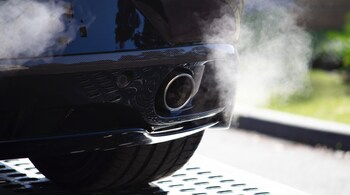
The crackdown on fossil fuel emissions continues, with the recent implementation of CAFE II norms (April 2022) giving us a taste of what is to come. In short, more stringent emission regulations are designed to get car manufacturers to cut down on their overall CO2 levels, chiefly through software and hardware-related upgrades and by shifting to electrified or hybridised powertrains. But just what do the upcoming norms entail, and more importantly, how is it going to affect the already high price tags attached to new vehicles?
What are CAFE norms?
The Corporate Average Fuel Economy (CAFE) norms are primarily designed to increase fuel efficiency, which, in turn, will lower a company’s overall CO2 footprint. At present, the existing limit for average CO2 emissions happens to be 130g/km. With CAFE II in effect, the target has been lowered to 113g/km. The key difference between CAFE norms and BS6 II is that the former focuses on reducing all manner of harmful by-products from a car’s exhaust (sulphur, nitrogen oxide, etc), while the latter focuses exclusively on CO2 emissions. However, both norms force manufacturers to lower fuel consumed by their vehicles, and simultaneously, move towards electric mobility, as CAFE regulations, first introduced in 2017, apply to petrol, diesel, LPG and CNG vehicles.
How strictly are these norms followed?
Not very, as it turns out. While carmakers have introduced new technology in the form of start/stop tech, mild-hybrid technology, efficient diesel options (diesel engines emit less CO2 than petrol ones, as the fuel burns slower than petrol) and a larger CNG portfolio, they are yet to meet these requirements. According to a report by business intelligence expert Jato Dynamics, Mahindra & Mahindra’s fleet-level emissions for FY22 were 28 percent higher than the CAFE II target. Even Maruti Suzuki and Hyundai exceeded the target by 10 percent. At present no financial penalties are applicable to Indian manufacturers, unlike those in the US, China and Europe. However, talk of financial penalties has been doing the rounds.
In the future, the government is likely to introduce a carbon credit system, wherein automakers can buy carbon credits from brands making zero-emission products, further incentivising the production of pure electric vehicles (EVs). All manufacturers have to submit a report to the nodal agency – Ministry of Road Transport and Highways (MoRTH) – at the end of each financial year, following which their performance is assessed.
Enter BS6 Stage II
If CAFE II norms are a mere rap on the knuckles, BS6 Stage II is a more severe form of corporal punishment for automakers. Set to be implemented in 2023, it would require vehicles to meet emission norms in the real world, as opposed to a laboratory. For this, vehicles will need to have an on-board self-diagnostic device called OBD2, as standard. The device will constantly monitor the catalytic converter, oxygen sensors, etc. to keep a close watch on emissions. Should it exceed the parameters, it will indicate (through warning lights) that the vehicle be submitted for a service.
In addition to this, BS6 Stage II norms also require the carmakers to upgrade both hardware and software on the cars. In order to control the level of fuel burnt, the vehicles will carry programmed fuel injectors that control the timing and amount of fuel injected into the petrol engine. Even the semiconductors used by the vehicle will have to be upgraded to monitor throttle, crankshaft positions, air intake pressure, temperature of the engine and the contents of the emissions from the exhaust (particulate matter, nitrogen oxide, CO2, sulphur), etc.
Some additional measures will also include public disclosure of emissions data (brands like Mercedes-Benz already allow you to track their emissions using real-time blockchain technology).
The challenges that lie ahead
It’s unclear to what extent acquisition cost for cars will go up, but there’s no doubt it will lead to a rise in overall costs. For global manufacturers like Mercedes-Benz, whose cars are already Euro6d compliant, the transition to BS6 II would be easy. But local manufacturers will have to find ways to manufacture PGM (the programmed fuel injection device) at scale and manage costs. The existing semiconductor shortage isn’t likely to go away anytime soon. Manufacturers won’t have an easy time making the right amount of upgrades to the software that would help them lower fuel emissions.
The shift from BS4 to BS6 has already been brutal for carmakers, having been given very little time to make the transition. While the next transition phase will not be as brutal, the existing supply chain issues continue to be a spanner in the works, with prolonged waiting periods and rising acquisition costs serving as chief factors deterring people from purchasing new cars. More than 50 percent of India’s car-buying population comprises first-time buyers and disincentivising them can dramatically affect the sales figures of carmakers. Furthermore, several carmakers have leaned on efficient diesel powertrains in the past to lower their overall CO2 levels, instead of investing in petrol hybrid powertrains. With manufacturers like the VW Group having discontinued diesel cars entirely, and several others thinning the diesel-powered herd in their stables, manufacturers will have no choice but to avail the PLIs provided by the government and double down on investing in EVs, even though penetration of EV sales is considerably lower than that of petrol, diesel or CNG cars. After all, there’s only so much that can be done to the ICE engines in order to lower emissions while managing costs.
Discover the latest Business News, Sensex, and Nifty updates. Obtain Personal Finance insights, tax queries, and expert opinions on Moneycontrol or download the Moneycontrol App to stay updated!





