

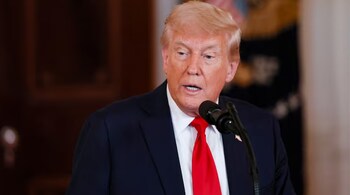
The Trump administration’s decision to allow Nvidia to sell its H200 artificial intelligence chips to Chinese companies marks one of the most consequential reversals in Washington’s tech-export policy in years. After months of negotiations between chip-industry leaders and national-security officials, the White House concluded that the economic upside — including a proposed revenue share with the US government — outweighed earlier concerns that such chips could aid China’s technological and military ambitions, the New York Times reported.
For Nvidia, the approval represents a major win. Jensen Huang, the company’s CEO, has lobbied intensely for permission to sell higher-end chips to China, arguing that cutting off Chinese buyers entirely would both hurt American semiconductor companies and accelerate Beijing’s push toward domestic alternatives. The administration appears to have accepted this logic, but the move has triggered bipartisan unease in Congress, where lawmakers fear Washington is trading short-term commercial gains for long-term strategic risk.
The H200: Why this chip matters
The H200 is Nvidia’s second-most powerful AI chip, significantly more capable than the watered-down H20 chip the firm earlier designed specifically for the Chinese market. For months, US policy restricted Nvidia to selling only those downgraded chips. But high-level talks — including a meeting between Huang and Trump — persuaded the administration to allow the sale of the H200 to vetted Chinese commercial users.
The administration’s logic is twofold. First, officials believe Chinese firms reliant on Nvidia will remain dependent on American technology rather than pivot entirely toward home-grown chips. Second, the White House wants to direct a portion of Nvidia’s China revenue into the US government, though legal experts have already warned that collecting such “fees” may violate export-control laws.
Why this is a strategic reversal
The initial Trump stance in his second term echoed the approach taken by his first administration and later by the Biden White House: limit China’s access to cutting-edge hardware. Restrictions targeted the chips most useful for training and deploying modern AI models, including Nvidia’s top-tier Blackwell line.
But geopolitical conditions have shifted. The US and China restarted high-level trade dialogues in late 2025, smoothing tensions temporarily after a series of tariff hikes and rare-earth export disputes. In private and public messages, Beijing signalled strong displeasure with American tech restrictions. The H200 approval now appears to be part of a broader stabilisation effort, especially ahead of Trump’s upcoming visit to China.
The risks: National security concerns remain sharp
Not everyone in Washington agrees with the administration’s softer line. Senators across party lines have criticised the move, arguing that supplying China with advanced AI accelerators could enhance Beijing’s military and industrial capabilities. Some lawmakers fear the H200’s performance is powerful enough to meaningfully advance China’s AI ambitions, even if the more advanced Blackwell chips remain off limits.
There is also uncertainty about whether Chinese firms will even buy the H200 in large volumes. Earlier in 2025, Beijing discouraged companies from purchasing Nvidia’s H20 chips, citing unspecified “backdoor risks.” Since then, China’s own chipmakers, especially Huawei, have accelerated their efforts to become self-reliant.
What happens next
The move leaves Washington navigating a delicate balance: enabling American chip companies to profit while trying to maintain a technological edge over a determined rival. The Commerce Department will conduct end-use screening of Chinese buyers, but enforcement remains a difficult task.
For now, the approval underscores a quiet reality in the global chip race: economic interdependence still tethers the world’s two largest powers. Even amid rivalry, neither side is ready to sever the most valuable technological link between them.
Discover the latest Business News, Sensex, and Nifty updates. Obtain Personal Finance insights, tax queries, and expert opinions on Moneycontrol or download the Moneycontrol App to stay updated!





