

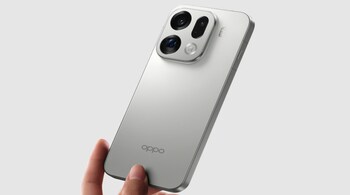
Oppo believes the next wave of smartphone competition will hinge not on who offers AI features, but on who implements them well enough for users to actually feel the difference. In a conversation with Moneycontrol, Peter Dohyung Lee, Head of Product Strategy at Oppo, outlined how the company is approaching AI across its portfolio and why the Find X series remains central to its premium ambitions.
Lee acknowledges that AI is rapidly becoming a standard expectation across smartphones, regardless of price. “AI more or less remains the same across phones,” he said, noting that upcoming versions of ColorOS bring many of the same features to Reno and entry-level devices. But he argued that the real distinction lies in depth and quality. “Every time we announce a new ColorOS, a new Find X, we introduce whole new features like AI Mind Space and AI Portrait Glow,” he said. “If you want to enjoy the full set of Oppo AI, then Find X is the option.”
According to him, Oppo follows a “waterfall strategy” for AI rollout. Flagships get new capabilities first, and the most essential ones gradually trickle down to affordable devices. “Entry-level smartphones still have AI features,” he said, “but at least we try to deliver the very essential AI that can be usable for everyone like AI Eraser.”
Despite the buzz around AI, Lee believes many users still don’t fully understand or experience its value. The challenge, he says, is that AI-driven improvements are often invisible unless someone actively tries them. “If you don’t use it, you don’t understand,” he said. “AI is software, a tool to enable something and create value.”
He pointed to AI Portrait Glow as an example of a feature that has begun proving its worth to serious creators. “A commercial photographer told me he compared an image edited on Find X using AI Portrait Glow to one edited with Lightroom on a Mac,” Lee said. “He said he wasted his time using the old workflow. Even professional photographers recognise the quality.”
Goldee Patnaik, head of PR and communications, Oppo India, echoed this, arguing that brands need to simplify the value of AI rather than bombard consumers with jargon. “Till the time you tell a consumer in a very simplified manner how it’s going to help them lead a better life, adoption won’t grow,” Patnaik said. “People are shy even to say they don’t know how to use AI beyond the basics.”
Like earlier transitions from 2G to 4G or the mass adoption of 5G, they said AI will evolve from premium differentiator to mainstream expectation. “Massification of AI is the need of the hour,” the Patnaik added. “People today look at tech features when buying a car. Smartphones are getting into the same transition.”
When asked whether AI has become a deciding factor in buying a phone, Lee compared the shift to the early days of smartphones themselves. “Fifteen years ago, moving from feature phone to smartphone was not hygiene,” he said. “Now smartphone is hygiene, but some brands lead certain areas. Why? Because quality matters.”
Lee says reacting quickly to trends is essential for success in the premium segment. “If you stay quiet after launching one product and don’t refresh the portfolio, it won’t work,” he explained. “Technology adoption changes too fast.”
As AI becomes a baseline expectation for users, Oppo believes the winners will be the brands that show — not just tell — how it makes everyday life easier.
Discover the latest Business News, Sensex, and Nifty updates. Obtain Personal Finance insights, tax queries, and expert opinions on Moneycontrol or download the Moneycontrol App to stay updated!





