

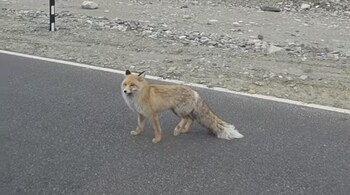


A rare Himalayan red fox was recently spotted near Pangong Lake in Ladakh, sparking a wave of excitement on social media. The fox calmly approached the roadside, interacting with tourists in a striking display against the stark Himalayan landscape.
The video quickly went viral, captivating wildlife enthusiasts and travellers alike. But experts caution that human interaction, even with the best intentions and can harm wildlife.
Who Is This Mysterious Alpine Visitor?
The Himalayan red fox is a native subspecies adapted to high-altitude cold deserts. It plays a vital ecological role by controlling rodent populations. Though not currently endangered, its natural behaviour is sensitive to human interference. The fox’s curious appearance near a popular tourist spot highlights the delicate balance between wildlife and humans.
Feeding this Fox might be Dangerous
Indian Forest Service officer, Parveen Kaswan warned that the fox’s behaviour may indicate prior feeding by humans. Such “sympathy-based conservation” can create dependency and alter natural instincts. Animals may lose fear of humans, leading to road accidents or conflicts. Dietary changes from human food can negatively affect their health and survival.
Are Red Fox Sightings Common in Ladakh?
Himalayan red foxes are adapted to high-altitude cold deserts like Ladakh. They are elusive and mostly nocturnal, avoiding human activity. Daytime encounters, especially near roads or tourist areas, are unusual.
Experts believe this fox’s approach may indicate prior habituation to humans. Occasional sightings happen in remote regions, but close human interactions remain extremely rare. This explains why the Pangong Lake footage attracted widespread attention.
Is there a need of Conservation?
Currently, the Himalayan red fox is not classified as endangered. Its populations are stable in high-altitude habitats across India, Nepal, and Bhutan. However, human interference whether its feeding or close interaction, can disrupt natural behaviour.
Animals' dependency on humans may lose hunting instincts and face greater mortality risk. Conservation efforts focus less on population numbers and more on preserving natural behaviour and habitats. Responsible tourism, habitat protection and public awareness are key measures for long-term survival.
Discover the latest Business News, Sensex, and Nifty updates. Obtain Personal Finance insights, tax queries, and expert opinions on Moneycontrol or download the Moneycontrol App to stay updated!





