

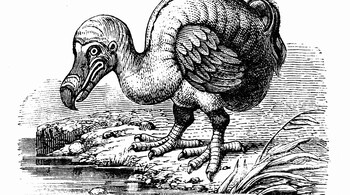

- A new field survey by the Samoa Conservation Society has confirmed several sightings of the critically endangered manumea, or little dodo, in remote rainforest areas. The rare observations, the first in over a decade, have renewed hope for saving the species. Conservationists warn, however, that invasive predators, habitat loss, and limited resources continue to threaten the bird’s survival, making urgent protection measures essential.

Conservationists in Samoa have confirmed rare new sightings of the manumea, a critically endangered bird often called the little dodo, raising cautious hope for a species long feared extinct.
Rare Manumea Sightings Renew Conservation Hopes
A recent field survey by the Samoa Conservation Society confirmed multiple sightings of the manumea within the remote Uafato rainforest. The survey, conducted between October 17 and November 13, recorded 5 confirmed encounters. This marked the first sustained evidence of the bird’s presence in more than a decade. Previous expeditions often passed without a single sighting, deepening fears the species had vanished.
Conservationists now say the discovery offers a narrow but vital chance for survival. The manumea holds deep cultural value as Samoa’s national bird. Its loss would represent both ecological and cultural tragedy. Researchers described the moment as encouraging yet fragile. Each sighting underscores how close the species remains to extinction.
Project coordinator Moeumu Uili of the Samoa Conservation Society said uncertainty had long surrounded the bird’s status. She told LiveScience the fear was always silence. Researchers worried the absence of evidence meant extinction. The recent encounters changed that outlook.
The bird’s behaviour, however, remains highly elusive. It appears briefly before vanishing into dense forest cover. The last confirmed photograph in the wild dates back to 2013. Difficult terrain and heavy rainfall further complicate monitoring efforts. Scientists now rely on bioacoustic recordings and camera traps. Community reporting has also become increasingly important.
Why The ‘Little Dodo’ Still Matters
Scientifically known as Didunculus strigirostris, the manumea is the sole surviving member of its genus. It is a close evolutionary relative of the extinct dodo. Both evolved without mammalian predators on isolated islands. The manumea resembles a chicken in size but carries immense scientific importance. Its extinction would erase an entire genetic lineage thousands of years old. Conservationists describe it as a living fossil. Losing it would close a unique chapter of evolutionary history.
Despite hunting bans and public awareness campaigns, threats remain severe. Habitat loss continues to shrink suitable forest areas. Illegal hunting has declined but has not disappeared entirely. Murals across Samoa urging protection reflect growing public concern. Still, the bird’s numbers remain critically low.
Predators, Technology And The Fight Ahead
Invasive predators now pose the greatest danger. Feral cats, rats and pigs prey on eggs, chicks and adults. Joe Wood of the Toledo Zoo said the impact has been devastating. He noted feral cats are likely driving ongoing decline. Rats also reduce food sources by consuming seeds and insects. Conservation groups are expanding predator control programmes beyond existing reserves. These efforts require funding, time and sustained political support.
New strategies include biobanking and genetic research. Scientists hope preserved cell lines may support future breeding programmes. Colossal Biosciences is assisting with tools to identify the manumea’s call. However, experts caution technology alone cannot save the species. University of Otago biologist Nic Rawlence said habitat protection remains essential. Without restored forests and predator control, recovery remains unlikely.
For now, the manumea survives quietly in Samoa’s forests. Its future depends on swift, coordinated action before the chance disappears.
Discover the latest Business News, Sensex, and Nifty updates. Obtain Personal Finance insights, tax queries, and expert opinions on Moneycontrol or download the Moneycontrol App to stay updated!





