

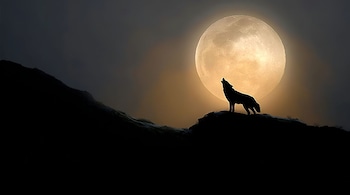
The first full moon of 2026 will light the sky early Saturday, Jan. 3. Known as the wolf supermoon, it marks the last of four consecutive supermoons. Named for mid-winter and wolves’ howling in North America, the moon will appear slightly larger and brighter than usual. Astronomers say this year will feature 13 full moons, including a blue moon and the last total lunar “blood moon” until 2029.
Wolf Supermoon Reaches Full Phase
The wolf moon will technically reach full phase at 5:03 a.m. EST. Observers note the exact moment matters less than moonrise during dusk. The full moon will climb above the eastern horizon as twilight fades. This supermoon follows the harvest, beaver and cold moons from late 2025. Supermoons occur when a full moon nears perigee, Earth’s closest orbital point. The effect makes the moon appear unusually bright and large to viewers.
Best Viewing Times Across the United States
The best time to see the full wolf supermoon is at moonrise. In New York, sunset falls at 4:40 p.m. EST, with moonrise at 4:56 p.m. EST, sixteen minutes later. In Los Angeles, sunset will occur at 4:56 p.m. PST, with moonrise at 5:25 p.m. PST, twenty-nine minutes later. Observers are advised to find elevated or open eastern-facing locations. Naked eyes will suffice, though binoculars reveal lunar surface details more clearly.
Why the Wolf Moon Rises High
January’s wolf moon climbs higher than other full moons of the year. The full moon mirrors the sun’s path across the sky, opposite in position. After the winter solstice, the sun remains at its lowest point. Consequently, the wolf moon lingers above the horizon longer than others. Its elevated path provides the longest opportunity for sky watchers.
Upcoming Lunar and Planetary Events
A week later, Jupiter reaches opposition, appearing at its brightest in January. Binoculars or small telescopes will enhance viewing of the largest planet. The next full moon, the snow moon, occurs Feb. 1, 2026. Three of 2026’s full moons will be supermoons, and two will feature eclipses. The first, March 3, will be a total lunar eclipse of the worm moon. The second, Aug. 27-28, will be a deep partial eclipse of the sturgeon moon.
The wolf supermoon promises a striking start to a year of celestial events. Observers are encouraged to enjoy this high, bright moon while it graces the night sky.
Discover the latest Business News, Sensex, and Nifty updates. Obtain Personal Finance insights, tax queries, and expert opinions on Moneycontrol or download the Moneycontrol App to stay updated!





