

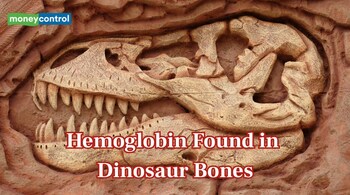
Scientists have confirmed that blood molecules survived in dinosaur fossils for millions of years. The findings focus on Tyrannosaurus rex and Brachylophosaurus canadensis specimens. By analysing fossilised bones, researchers detected heme, a key iron-rich component of haemoglobin.
This finding lends support to assertions that soft tissue residues are authentic, not recent contaminants.
Resonance Raman Spectroscopy Identifies Heme in Fossil Bones
The researchers employed Resonance Raman spectroscopy to detect molecular signatures of heme. Laser light was fine-tuned to pick up vibrational signals from proteins buried in fossils. Scientists identified patterns consistent with modern haemoglobin, with some molecules attached to goethite.
The mineral appears to stabilise the proteins and prevent further chemical decay. Fossil samples were matched to ostrich bones and human blood to validate results. The comparisons excluded contamination by bacteria or the external environment.
Degradation Pathway Shows How Proteins Ride Out Fossilisation
Scientists charted how haemoglobin molecules degrade over time via spectral analysis. Initial degradation happens shortly after death but stabilises if provided with specific conditions.
Goethite binding protects protein fragments, allowing them to persist for over 66 million years. Co-author Mary Schweitzer emphasised that heme bound to globin confirms dinosaur origin. This mechanism offers insight into how soft tissue can survive extreme fossilisation processes.
A New Approach to Fossil Preservation
The research changes how fossilisation is thought about from destruction to biochemical trace preservation. Fossils could contain microenvironments that would enable ancient molecules to survive and demonstrate metabolism and physiology. Scientists propose that these results create avenues for investigation of molecular chemistry over geologic time. RR spectroscopy allowed scientists to verify the presence and modes of preservation of ancient blood. These findings have the potential to expand knowledge of the biology of extinct species.
Discover the latest Business News, Sensex, and Nifty updates. Obtain Personal Finance insights, tax queries, and expert opinions on Moneycontrol or download the Moneycontrol App to stay updated!





