

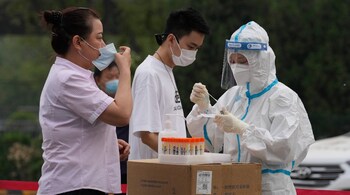
Macau carried out mass testing of its 700,000 residents on Tuesday after the emergence of COVID-19 cases in the past week, including at a major casino that prompted authorities to seal 1,500 people inside.
All residents in the world's biggest gambling hub have been told to take a PCR test on Tuesday and then test themselves daily with rapid antigen tests. The order comes as Typhoon Nalgae approaches southern China with authorities hoping the PCR tests can be completed in one day.
Authorities locked down MGM China's Cotai casino resort on Sunday, with staff and guests ordered to stay inside for three days. It was not clear whether they would be released on Tuesday.
After of a three-month spell of virtually no COVID cases, 11 infections have been found in the past few days and the return of curbs marks a setback for casino executives and investors keen for a recovery in gambling revenues.
In one bright note for the industry, travelling to Macau became easier for mainland residents from Tuesday with the advent of an online visa system which replaces the need to file applications in person.
Macau, a Chinese special administrative region, has adopted China's zero-COVID policy that seeks to stamp out every outbreak and implements frequent lockdowns. On the mainland this week, authorities forced the closure of Disney's Shanghai resort while a Foxconn plant in Zhengzhou continues to be rocked by workers fleeing the compound over strict COVID restrictions.
Discover the latest Business News, Sensex, and Nifty updates. Obtain Personal Finance insights, tax queries, and expert opinions on Moneycontrol or download the Moneycontrol App to stay updated!





