

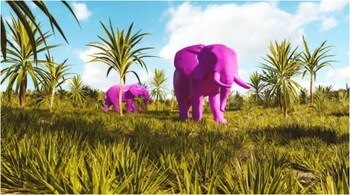
The adage "Don't think of a pink elephant" is a common psychological test. However, for some individuals, this seemingly simple task is impossible. These individuals, known as aphantasics, lack the ability to voluntarily visualise mental images.
In a recent study, researchers at the University of Queensland delved into the phenomenon of aphantasia, exploring its implications for mental imagery and thought processes. The study revealed that aphantasics, while unable to visualise, possess unique cognitive abilities and experiences.
What is Aphantasia?
Aphantasia is a condition characterised by the inability to visualise mental images. People with aphantasia cannot voluntarily conjure up images in their minds, such as imagining a loved one or a specific scene. This lack of visual imagery does not affect other cognitive functions, such as memory or problem-solving.
The Pink Elephant Paradox
The classic "pink elephant" thought experiment highlights the difficulty of suppressing unwanted thoughts. However, for aphantasics, this is not a challenge. They are able to resist involuntary visualisations, suggesting a unique ability to control their thoughts.
The Benefits of Aphantasia
While aphantasia may seem like a limitation, it can also offer certain advantages. Research suggests that aphantasics may be more resistant to intrusive thoughts and mental rumination. They may also have a heightened ability to focus and concentrate, as they are not distracted by unwanted mental imagery.
The Diversity of Human Experience
The study emphasises the diversity of human experience, with individuals possessing varying degrees of visual imagery ability. While most people can visualise mental images, some may have weaker or stronger visual imagery than others. Aphantasics represent one end of this spectrum, with a complete absence of voluntary visual imagery.
Daydreaming and Mental Imagery
Aphantasics experience daydreaming differently from those with typical visual imagery. While others may visualise scenes and characters in their minds, aphantasics often rely on other sensory modalities, such as auditory or kinesthetic experiences.
The Impact of Aphantasia on Trauma
The study raises the question of whether aphantasia may offer protection against the intrusive and distressing memories associated with trauma. While further research is needed to explore this connection, it is possible that the inability to visualise traumatic events could mitigate their emotional impact.
Discover the latest Business News, Sensex, and Nifty updates. Obtain Personal Finance insights, tax queries, and expert opinions on Moneycontrol or download the Moneycontrol App to stay updated!





