

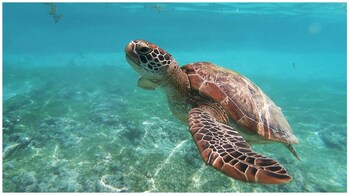
Eight children and one adult lost their lives after consuming sea turtle meat, while 78 others were rushed to hospitals in a tragic incident on Pemba Island in the Zanzibar archipelago, according to authorities on Saturday. The incident has once again raised concerns about the consumption of sea turtle meat, a delicacy in Zanzibar that periodically leads to fatalities due to chelonitoxism, a severe form of food poisoning.
The mother of one of the deceased children, who herself died on Friday, was identified as the adult victim, as revealed by Dr. Haji Bakari, the Mkoani district medical officer, Guardian reported. The fatal consumption occurred on Tuesday, with laboratory tests confirming that all victims had ingested sea turtle meat.
Authorities in Zanzibar, a semi-autonomous region of Tanzania, have mobilized a disaster management team in response to the crisis. Urging caution, they have advised the public to abstain from consuming sea turtles to prevent further casualties.
What is Chelonitoxism?
Sea turtles are renowned for their longevity and resilience, but beneath their protective shells lies a complex biochemical defense mechanism. Chelonitoxins, the toxic substances produced by these marine reptiles, serve as a safeguard against predators. While beneficial for the turtles, these toxins can pose a threat to humans when not handled with caution.
Chelonitoxism typically occurs when humans come into contact with certain parts of a sea turtle, such as their flesh, eggs, or bodily fluids. The toxins are most concentrated in the internal organs. Mishandling or improper cooking of sea turtle meat can increase the risk of chelonitoxin exposure.
As it is a delicacy in Zanzibar, it is consumed by many on the island potentially leading to fatalities and illness. Symptoms of chelonitoxism can include nausea, vomiting, abdominal pain, diarrhea, and in severe cases, it can lead to organ failure or even death.
This incident echoes a similar tragedy in November 2021 when seven people, including a three-year-old, lost their lives on Pemba Island after consuming turtle meat, leading to three additional hospitalizations.
To prevent chelonitoxism and promote conservation efforts, several countries have implemented regulations banning or restricting the harvesting, sale, and consumption of sea turtle meat.
In countries like India, US, Australia, Mexico and Malaysia, several laws are in place prohibiting the consumption or hunting of certain species of sea turtles.
Discover the latest Business News, Sensex, and Nifty updates. Obtain Personal Finance insights, tax queries, and expert opinions on Moneycontrol or download the Moneycontrol App to stay updated!





