

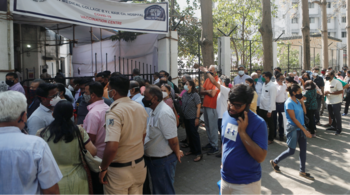
India on March 20 saw 43,846 cases and 197 deaths. The numbers are surging at a fast clip.
Maharashtra is leading the way with 27,126, but other states such as Punjab, Karnataka, Gujarat and Madhya Pradesh are also fast catching up in numbers. Since the pandemic began early last year, India saw 1.16 crore cases and about 1,60,000 deaths.
Alarmed by the surge, the Union Home Secretary Ajay Bhalla wrote to states urging them to take necessary measures for creating awareness among people to follow COVID appropriate behaviour and simultaneously take necessary action for its strict enforcement.
So what options do we have?
Enforcement
The government should enforce COVID-19 appropriate behaviour like wearing masks, hand hygiene and social distance. May be due to fatigue of pandemic or complacency, most people have become lax in adherence to COVID-19 appropriate behaviour. Enforcing may have challenges. The easing of restrictions on public transport, educational institutions, business establishments, entertainment places, in addition the local and state elections in several states, and upcoming mega religious events like Maha Kumbh Mela in Haridwar, all will pose tough challenge and potential risk of super spreader events if the rules are not enforced.
Contact tracing and cluster containment
Contact tracing and isolation needs to be implemented with rigour. One of the major reason for surge in cases in Maharashtra COVID cases was due to lapses in contact tracing and isolation, especially in districts. Also containment of clusters like buildings, or housing societies would be more effective way to confine the infections to that particular place.
Vaccination Covid-19 vaccines may not prevent human to human transmission, but will avert hospitalisation and death. The government should increase the speed of vaccination drive. The high risk people such as healthcare, frontline, elderly people and people with comorbidities, should be protected. The government is vaccinating at an average 18- 20 lakh people on a daily basis, but on holidays and weekends the figure drops drastically. At this rate India would be inoculating 5 crore doses per month. It would take at least 6-7 months to complete vaccination for high risk population. On the 64th day of inoculation, India administered 4.36 crore doses of COVID-19 vaccine. About 74 lakh people have got two doses of the vaccine. Like the polio vaccination, the government should go to the people and communities, and get them vaccinated. India without delay should approve Pfizer, Sputnik and J&J vaccines, and ensure no shortage of supplies to the domestic vaccination programme.
Tracking mutants
The government should keep a tab on new SARS-CoV-2 variants. Certain mutants of SARS-CoV-2 like the ones observed in the UK, South Africa and Brazil, not only have high transmissibility but can affect the efficacy of the COVID-19 vaccine. To sequence the viral genome of the virus, the government has set up Indian SARS-CoV-2 Genomics Consortium (INSACOG) Labs. For general surveillance - the government randomly collects samples of 5 percent of positive COVID-19 cases across India. Samples from metro cities, COVID clusters and new clinical symptoms are given priority for sequencing. INSACOG will have to ensure that the surveillance threshold needs to be maintained.
Discover the latest Business News, Sensex, and Nifty updates. Obtain Personal Finance insights, tax queries, and expert opinions on Moneycontrol or download the Moneycontrol App to stay updated!





