

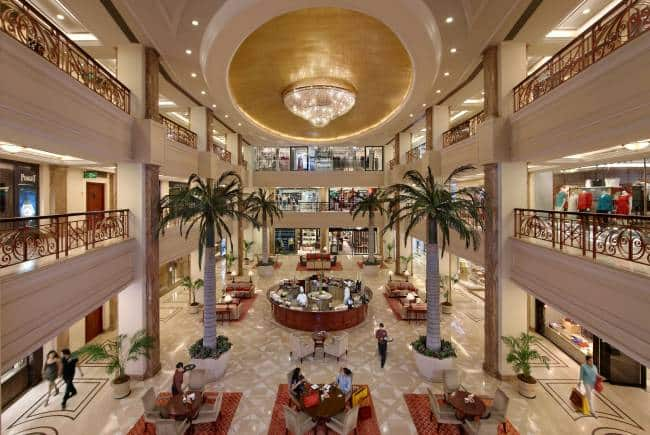
Ensemble's executive director Tina Tahiliani Parekh doesn’t remember the last time the store’s crisp concrete-meets-marble interiors were bereft of customers. While there have been a few by-appointment customers, the walk-ins and the vibrancy are missing from one of India’s oldest luxury fashion store.
Much like Ensemble, retailers are struggling to make sense of the debilitating effect of lockdowns on the once buzzing retail landscape. The constant ‘open today, shut tomorrow’ situation has sent luxury and premium retail into a tailspin.
Most stores have put in place the basic parameters: not more than two or three staff in the store and a restriction on the number of customers coming in. Yet, while some brands continue to bank on online sales, others such as Reliance Brands Limited have reported increasing footfalls, ranging from 25 -45 percent and retail business of up to 65 percent.
No one is in a better position to talk about transformation on the ground than Reliance Brands Limited (RBL), a $173 billion market-cap conglomerate, with a slew of luxury and premium brands in its portfolio, which operates 795 doors. Deval Shah, the Group Vice President, claims that only serious shoppers are stepping out. “The buying patterns are deeper and the average bill value has shown a jump. Earlier, the conversion rate was 12-14 percent. Now, it is 27-28 percent for a luxury brand and 80 percent for the high street.”
The focus is on purpose buying: for an anniversary, birthday or a festival. “The projections of sales we had made for October, we have already achieved it in August.” Browsing and casual shopping is now a rare practice.
The evolution of the shopping experience
The retail landscape has shifted to include curbside pickups, private shopping appointments and a blend of online and offline outreach.
People, pre-armed with knowledge about services and products they want to buy, are opting for delivery services, curbside pickups, online services and WhatsApp-based concierge services, says Yogeshwar Sharma, CEO & Director, Select CITYWALK.
RBL, which has reached its audience through online content and catalogues, are reporting people booking a slot online for luxury brands such as Bottega Veneta and then coming into the store. “Or people drive into the mall, tell us what they want to buy and we deliver it to their cars, along with anything else they may want, from a coffee to a sandwich. We have to face it; retail will change in ways like these,” reveals Shah.
Sometimes, the store team is tasked with visiting client’s homes with pieces chosen online or via a catalogue. “This allows the client to see how a piece fits in their home and is a safer option,” say Divyansh Sanklecha and Vipul Pirgal, founders of design store Curio Casa.
The onus of ensuring that the retail experience is impeccable rests on the well-trained store team. “They have to take care of every aspect of safety, ensure all spaces, including the changing rooms and the billing desk are sanitised,” adds Anshuman Singh, Founder-CEO of desi designer bag brand, Paul Adams.
The retail store teams are also being called on to innovate. “The pandemic has thrown up multiple challenges. The staff at the storefront has to find quick solutions and be service driven. They have to become a customer’s advocate and look for the best retail experience,” contends Yogesh Chaudhary, Director, Jaipur Rugs.
Sangeeta Boochra, who runs an eponymous jewellery brand, emphasizes VR solutions for store associates. “They may have to de-escalate situations such as customers who refuse to abide by COVID-19 regulations or incidents of unrest, which is where VR technology comes in play.”
Beauty brands such as Kama Ayurveda have eliminated testers to avoid contamination, replacing them with virtual consultations and complimentary samples of newer products. The stores have been rejigged to allow for fewer customers, so “there is minimal to zero contact in the end-to-end buying cycle, inclusive of contactless payment, sanitisation stands, amongst other mechanisms”, says a spokesperson.
Physical-meets-digital experience
While the tangible side of retail will persist, many people have discovered online shopping. “Brands like us need to bridge the online and offline experience and that is going to be the key to success,” adds Chaudhary, forcing brands to consider a heightened e-commerce presence. “To bank on online retail is the way for to keep businesses running,” say Divyansh Sanklecha and Vipul Pirgal. “We have had to train the people who staff our store to field telecalls from people who browse online and call in for more details.”
Over the last few months, RBL, which has had enough stock in its various stores across 20 locations, have sold via online platforms, personal calls and through WhatsApp. Early this month, it hosted a luxury shopping festival, a calendared list of digital events through video conference channels, where customers could buy in an auction.
Shopping, in the pre-COVID era, was considered a tangible experience, dependent on how a product feels and looks. Now, brands are betting big on digital experiences to push their retail sales. Singh says that brands will have to amp up the digital store experience as that would decide if they want to buy a product or not. “They would go on the bases of comments, reviews and ratings of a product.”
The line between online and offline shopping has been blurring for a while, a process that has gained faster traction. Gaurav Mehta, Founder & CEO, Jaipur Watch Company, recommends tracking a customer’s decision journey to understand changing preferences, in the process opening up a massive box of creative ideas that will enable the retailer to create a powerful brand experience.
“Once, shoppers would rely on salespeople to understand the products and make a choice. Now, they research to derive maximum value. This can be beneficial to smart retailers, provided they follow the customer’s online decision-making journey, understanding their buying behaviour, which will enable them to make better decisions for the brand.”
Technology is reaching a level where physical experiences are being simulated online. “Innovative solutions such as no-touch pop-up stores are being implemented,” he adds. “We are providing 3D videos of each product before moving into manufacturing the watch.”
Sangeeta Broocha, who runs an eponymous jewellery brand, has implemented a mirroring 3d technology to offer a shopper in-store experience to her customers, digitally to boost sales. “Even then, we will just grease the machine well to sustain. Jewellery needs touch and feel to convince a client.”
While everyone is gung-ho about the growth of online retail, Shibani Jain, Founder & CEO, Baaya, a design store and studio that focuses on handmade, sounds a warning. “New e-commerce initiatives by brick and mortar companies must be thought through, with features a focus on managing the site, promoting it, managing deliveries and quality. My belief is where luxury goods shopping goes, people are already visiting the stores if they trust the brand.”
The curation of collections
In the short term, collections that offer value for money will find traction. “The customer may be more aware of mortality and uncertainty, and more cautious in his/her buying. The value of products offered will be the clinching factor for the successful return of retail stores,” say designers Swati & Sunaina.
Curio Casa has been adding pieces to its low-to-mid-range collections. “The small pieces offer a glimpse into our product quality without splurging. We have had repeat clients who purchased exclusive luxury pieces from us once they were assured of the quality,” says the Curio Casa duo.
While RBL is seeing fast sales in categories such as innerwear, casual wear such as t-shirts and Polos and handbags, at Paul Adams, the handmade and hand-crafted leather pop series is doing well. “When people come into the store, we need to create top-of-mind awareness,” says Singh.
Luxury brands are focusing on responsible consumption and slow living.
“We anticipate a need for meaningful value in luxury offerings that branch into personalized services,” adds Prashant Gaurav Gupta, VP and Head – Luxury Malls, DLF Emporio & The Chanakya.
Mehta says besides technology integration, sustainable luxury will gain traction. “Gen Z and Gen Alpha are all about the environment. They prefer to do business with brands that promote eco-friendly living.”
Most brands are dealing with falling consumer demand. “Shopping will become more personalised and because people have realised they don’t need so many things in their life,” contends Chaudhary, whose brand is trying to tell better stories in terms of design language. “Earlier we used to showcase all our rugs. We now keep a well-curated line up for a better visual impact.”
Trends around the 3H need to be kept in mind while putting out products—home, work from home, and health and hygiene while planning for the future, says Jain.
Some brands such as SR Artefacts and Robbe & Berking are reaping riches as people continue to stay homebound. “For the next year, if not longer, people will entertain at home. A majority of our customer requests are for home decor and tableware items that will help elevate a home-dining experience. Also, people want to artisans. As a brand, we frequently support Indian artisans to help their inimitable art,” adds its founder and Managing Director, Prashant Sarawgi.
How malls will adapt
Malls with luxury and premium brands have begun offering differential service. Select CITYWALK, for instance, has instituted concierge services, contactless ordering, home delivery services and a digital catalogue aptly titled 'The Home Edition'— a beautifully laid out catalogue featuring all the finest products, with prices and features listed out. Sharma claims, “Brands have evolved to incorporate a phygital (physical-meets-digital) era of sale and purchase. Customers prefer experiences that bring them closer to products and not people.”
DLF Emporio & The Chanakya is offering an on-call personal shopper. “They guide customers via video call to understand their specific requirements, exact sizing options, helping them to pick their favourite styles,” adds Gupta. “The curbside pickups have been formalized by the two malls with a designated concierge, who helps people in cars who drive in to get their orders without stepping in.”
All three malls have set up sanitisation tunnel for cars and contactless parking experience, automated hand sanitizers at all touchpoints and high-definition thermal cameras to enable seamless entry. Stores have been redesigned for COVID etiquette. “Each outlet has tweaked the design and layout for a contactless experience,” says Sharma.
Will retail survive?
Some stores have already put down their shutters, while others will survive, Jain says,
“The ones who have been able to keep their heads above the rising waters of crippling rental payments, losing their people talent (or having to lose their talent to cut costs), not having enough capital to survive the lockdown, and their inability to carry on meaningful work-from-home are going under. The ones who have adapted, made plans and understand what are the requirements of customer post-COVID will do well.”
While virtual shopping is helping people make the right choice, many are choosing to come into the store to make the final purchase. According to Sarawgi, “They come in to see a few selected items, speak to us about their choices and make the final purchase. This creates a smoother and minimal contact experience, without compromising on the intimate factor that comes with luxury consumption.”
In the long run, luxury retail in India may gain from continued closures of borders and the fear of getting on an aeroplane, as consumers, who made their purchases abroad, now look at spending in India. “Earlier, almost an estimated figure of 50 million Indians used to travel abroad for their shopping needs—be it Singapore, London, the USA, or Dubai, particularly during the peak months of May, June and July. Now, we see an influx in the consumption demand coming from within the country as DLF Emporio and The Chanakya become their natural choices,” Gupta says.
Besides, luxury stores are geared toward lesser footfall with highly personalised ‘By appointment’ strategy, where appointments are given at time intervals, say Swati & Sunaina, though impulse retail buying spaces may reduce, adds Jain.
Interestingly, in the long run, people will prefer shopping in a mall to a high street store. As Shah emphasises, “There is more control in a mall, with employees dressed in PPE, the temperatures checks, air filters and purifications in various ways, which is not possible in a store on Linking Road or Khan Market.”
Deepali Nandwani is a journalist who keeps a close watch on the world of luxury.
Discover the latest Business News, Sensex, and Nifty updates. Obtain Personal Finance insights, tax queries, and expert opinions on Moneycontrol or download the Moneycontrol App to stay updated!





