

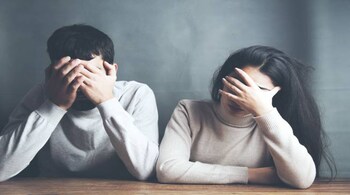
Functional families are all alike; every dysfunctional family is dysfunctional in its own way. If this is true, then domestic abuse comes with a designer tag, each violence uniquely programmed for its victim.
Abuse comes in a million multiplying moods: verbal, emotional, physical, intellectual... The subcategories are endless. Best of all doesn’t look like abuse from the outside and sometimes not from the inside either. The abused live a lie, that everything will become alright tomorrow, the day after. That the violence is temporary. That it is they who cause the violence, that if they were less them, it would all end.
Caught mid-cycle, they can only go with the flow. They stare blankly at those who tell them to walk out. No support system in place. There are kids involved, there are insecurities involved. Self-confidence leached away bit by bit so that they stand crumpled and helpless. Every vulnerability they shared in the ‘safe’ place of the relationship is stored ammunition against them as far as the perpetrators are concerned. Their grip on reality is nebulous; family and friends seem to be on a different planet. Only the abuser by their side.
Plus, they are by now conditioned to believe that this is real life and they can’t wimp out. Lionel Shriver writes in We Need to Talk About Kevin: ‘It isn't very nice to admit, but domestic violence has its uses. So raw and unleashed, it tears away the veil of civilization that comes between us as much as it makes life possible. A poor substitute for the sort of passion we like to extol perhaps, but real love shares more in common with hatred and rage than it does with geniality or politeness.’
In Netflix’s Ginny and Georgia, the latter’s past provides the required darkness in an otherwise frothy mommy-teen daughter caper. Georgia is on the run because she learned how to deal with abuse early on. In the Swedish series Quicksand the abuse is more subtly brought home; the reasons a person stays back in a toxic tie are too many to count. Maja’s motives are clear to us by the end – she feels her rich boyfriend has no one else. Even though he is a junkie and rapes her casually, she stays by his side. She equates her staying power with strength. Each time she thinks this is the last time he is like that. Hope, a refined form of self-abuse.
It is too complicated an area to go into, why domestic abuse victims stay on despite the bruises and blows, clinging desperately to stray sweet nothings and routinely spelt promises.
Sure, in cinematic terms the survivors walk off into the sunset, as Taapsee Pannu did in Thappad. But in real life, there is no sunset to go to, only the replacing of one hell with another, of overwriting the current uncertainty with an economic one. The fear of the known may seem less than the fear of the unknown.
Survival means tearing yourself down and building a new you. How many people caught in a nightmare can calmly plan an exit?
Discover the latest Business News, Sensex, and Nifty updates. Obtain Personal Finance insights, tax queries, and expert opinions on Moneycontrol or download the Moneycontrol App to stay updated!





