
HomeNewsTrendsCurrent AffairsCoronavirus Second Wave | India’s daily cases increased from 1 lakh to 2 lakh in just over a week

Coronavirus Second Wave | India’s daily cases increased from 1 lakh to 2 lakh in just over a week

India has been registering a steady increase in COVID-19 cases for 36 days, taking the active case count to 14,71,877, which is 10.46 percent of the total infections reported so far

April 15, 2021 / 16:55 IST
Story continues below Advertisement
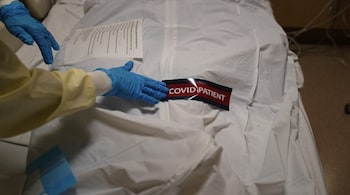
Representative image | Source: AP

India reported more than two lakh fresh coronavirus infections on April 15 -- the highest single-day spike the country has recorded since the outbreak of the pandemic.

As per data released by the Union Ministry of Health and Family Welfare, India saw a single-day spike of 2,00,739 COVID-19 cases a day after adding 1,84,372 new infections on April 14.

Story continues below Advertisement

The country had reported a single-day spike of over one lakh COVID-19 cases on April 4, 2021, which doubled to over two lakh cases on in just around 10 days. The shocking surge in coronavirus cases come in the wake of the second wave of the pandemic in India. Coronavirus second wave in India: Daily COVID-19 cases jumped from 9,000 to 1 lakh in less than 2 months

India has been registering a steady increase in COVID-19 cases for 36 days, taking the active case count to 14,71,877, which is 10.46 percent of the total infections reported so far. At the same time, the COVID-19 recovery rate of the nation has slipped to 88.31 percent.

The country’s cumulative coronavirus case tally crossed the 14 million mark on April 15, with the Health Ministry dashboard showing 14,074,564 cases; the COVID-19 death toll stands at 173,123 now.

COVID-19 Vaccine
Frequently Asked Questions

View more

How does a vaccine work?

A vaccine works by mimicking a natural infection. A vaccine not only induces immune response to protect people from any future COVID-19 infection, but also helps quickly build herd immunity to put an end to the pandemic. Herd immunity occurs when a sufficient percentage of a population becomes immune to a disease, making the spread of disease from person to person unlikely. The good news is that SARS-CoV-2 virus has been fairly stable, which increases the viability of a vaccine.

How many types of vaccines are there?

There are broadly four types of vaccine — one, a vaccine based on the whole virus (this could be either inactivated, or an attenuated [weakened] virus vaccine); two, a non-replicating viral vector vaccine that uses a benign virus as vector that carries the antigen of SARS-CoV; three, nucleic-acid vaccines that have genetic material like DNA and RNA of antigens like spike protein given to a person, helping human cells decode genetic material and produce the vaccine; and four, protein subunit vaccine wherein the recombinant proteins of SARS-COV-2 along with an adjuvant (booster) is given as a vaccine.

What does it take to develop a vaccine of this kind?

Vaccine development is a long, complex process. Unlike drugs that are given to people with a diseased, vaccines are given to healthy people and also vulnerable sections such as children, pregnant women and the elderly. So rigorous tests are compulsory. History says that the fastest time it took to develop a vaccine is five years, but it usually takes double or sometimes triple that time.
View more
+ Show



