

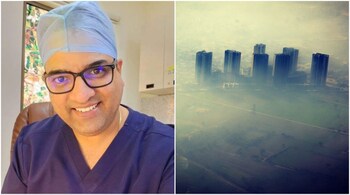
A senior cardiologist in Bengaluru recently explained how exposure to highly polluted air -- similar to the current quality of air in Delhi -- increases the risk of death due to heart attacks. Dr Deepak Krishnamurthy, a senior interventional cardiologist at Sakra World Hospital, also advised people to wear masks while stepping out in Delhi.
"Air pollution is an important and under-recognised risk factor for cardiovascular events (such as heart attacks). Higher levels of fine particulate matter (PM2.5) lead to endothelial dysfunction and slow flow in coronaries and systemic inflammation, leading to accelerated atherosclerosis and thrombus (clot formation)," he shared on X.
"What is important to note is that even acute exposure to increased PM2.5 levels like we are seeing with Delhi air pollution increases the risk of death due to heart attacks. It is high time the govt takes concrete measures to curb this menace," he added.
The doctor also shared infographics that highlighted that 25 percent of deaths caused by heart diseases were a result of exposure to highly polluted air. Dr Krishnamurthy also added that air pollution is a leading cause of global mortality, killing more people across the world than even diseases such as AIDS, malaria, tuberculosis, road accidents, and alcohol abuse.
When asked if using masks would help reduce the risks, Dr Krishnamurthy said, "Yes, especially when commuting in traffic."
Read more: Demand for air purifiers, masks surge as Delhi-NCR grapples with rising air pollution
Discover the latest Business News, Sensex, and Nifty updates. Obtain Personal Finance insights, tax queries, and expert opinions on Moneycontrol or download the Moneycontrol App to stay updated!





