

China’s artificial intelligence-powered autonomous-vehicle market is showing serious promise. So, of course, Elon Musk wants a piece of it, especially since he’s struggled to get self-driving technology off the ground in the US. That may not pan out as well as the Tesla Inc chief executive officer’s Beijing-backed electric-vehicle bet.
Local media say Tesla could be getting ready to test its full self-driving technology in China. Given the firm’s FSD track record in the US, that’s a scary and unsafe prospect. In May 2021, Tesla announced it was eliminating critical radars on new cars. It then started disabling them in vehicles already on the road, resulting in an uptick in crashes, the Washington Post reported. In February, it paused the rollout of FSD. Suffice to say, the global EV frontrunner has hit roadblocks on AVs. Presumably, the hope is that a turn to China will help accelerate its ambitions.
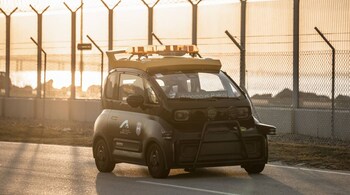
That’s unlikely. Even if Tesla is allowed to test its FSD in China, domestic players are speeding ahead, leaving it to play catch up. Bolstered by Beijing’s blueprint for connected and intelligent cars, companies like Pony.ai Inc and Baidu Inc have been operating robotaxis in designated areas in Beijing and Shanghai after jumping past high regulatory hurdles. Several other AI-powered auto software firms are working on advanced autonomous driving technologies, including high-definition maps, smart cockpits and so-called V2X, or vehicle-to-everything networks, that rely on sensors, cameras and the internet to keep drivers informed about road conditions.
The AI-backed advances have put China’s auto and related software industry leagues ahead of competitors. The market for intelligent vehicles is forecast to grow to almost $100 billion by the end of this decade. As of 2022, almost 30 percent of cars came with a high level of assisted driving features and over the next three years that’s expected to rise to 70 percent. It isn’t just companies talking big on technology. Consumers want more features, too. Tesla going in with an entry-level offering won’t cut it. To be sure, firms are still trying to workout profitable and sustainable models to keep the momentum going.
Beijing’s regulatory guidelines set a framework for companies to follow, but China’s self-driving industry has grown beyond this. TikTok owner ByteDance Ltd, along with startup Haomo Zhixing Technology Co, backed by domestic automaker Great Wall Motor Co, have established the country’s biggest computing center for autonomous-driving infrastructure. Earlier this month, Haomo released DriveGPT, a generative model that, like the much-documented ChatGPT, relies on reinforced learning with human feedback. It works with real-time data and drivers’ decisions to improve safety and help vehicles act in a more human-like way, the company’s CEO noted. Haomo is set to commercialise this, too. The startup’s driver-assisted products will be sold in vehicles in Europe (with the help of Amazon Inc), Israel and other parts of the world. Meanwhile, Baidu plans to establish the world’s largest driverless ride-hailing service.
A big part of the AI-focused push in the car and logistics industries can be credited to Beijing’s early efforts on policy design and iterative regulation. The guidelines have been sharpened, addressing everything from technical to liability issues. Last year, draft rules were released to encourage faster commercialisation. Cities and provinces are working on more intricate versions specific to the conditions in their areas. Shanghai tightened legislation that went into effect this past February. In Beijing, a list of firms qualified to conduct autonomous-vehicle road tests was released recently, along with permits for robotaxis.
Several automakers are partnering with AI firms so that they don’t fall behind, while regulators trying to put in place safety measures appear to have sacrificed innovation and oversight. Car companies in the US can, for instance, self-certify that they comply with guidelines.
For Musk’s Tesla and other automakers following the shift to greater autonomy, it will be important to track China’s AI path if they are to keep up. Already, firms in Europe are relying on Chinese companies like Thunder Software Technology Co for smarter cars. Much like EVs, where China zeroed in on batteries and effectively set the global standard by leading on policy, AVs may end up following Beijing’s AI rules. Brace yourselves.
Anjani Trivedi is a Bloomberg Opinion columnist. Views are personal and do not represent the stand of this publication.
Credit: Bloomberg
Discover the latest Business News, Sensex, and Nifty updates. Obtain Personal Finance insights, tax queries, and expert opinions on Moneycontrol or download the Moneycontrol App to stay updated!





