

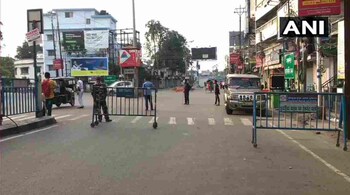
West Bengal is undergoing a 15-day COVID 19-induced lockdown to curb the spread of the virus infection. The lockdown, imposed from May 16, will continue till May 30.
During the lockdown, intra-state travel has been restricted, barring movement of emergency and essential services personnel
According to the guidelines, movement of private vehicles, taxis and auto-rickshaws will be prohibited except to and from hospitals, diagnostic and vaccination centres, airports and media houses. Intra-state movement of trucks and goods carriers shall also be prohibited except relating to medical supplies, oxygen and essential food commodities.
Read | Lockdown in West Bengal till May 30: Check what's allowed, what's not
In Kolkata, the police have launched an e-pass facility for the movement of people associated with essential services and online delivery in their vehicles.
Kolkata Police has launched a dedicated website where one can apply for an e-pass.
“An E-pass facility for movement of Essential Service Providers and Online Delivery Services has been launched today by Kolkata Police. Please fill up the form with your details. An E-Pass will be sent to your email. It can be pasted on your vehicle during travel,” Kolkata police tweeted on May 15.
Step-by-step guide to apply for an e-pass in Kolkata:
> Visit the Kolkata Police's dedicated website link: coronapass.kolkatapolice.org
> A new page will open. Click on the 'I Agree' checkbox below the screen.
> A new page will open. Select 'Individual' or Organization' as per requirement.
> Provide all the required details, including name, address of the source and destination, details of the vehicle, the reason for commuting, etc.
> Tick the checkbox 'I shall not operate/commute in the containment zones'.
> Submit the application.
> Applicant will receive the QR code-enabled e-pass through e-mail or SMS.
> Download the e-pass and paste. It can be pasted on your vehicle during travel.
> Show the e-pass at checking points or at the police picket.
The e-passes with QR-code have to be shown at the police pickets or checking points. The e-passes issued by Kolkata Police will be valid for the specific route, area and time period.
Discover the latest Business News, Sensex, and Nifty updates. Obtain Personal Finance insights, tax queries, and expert opinions on Moneycontrol or download the Moneycontrol App to stay updated!





