

The Ministry of Home Affairs released Unlock 5.0 guidelines on September 30, introducing further relaxations to activities allowed outside of containment zones from October 15. The MHA said on September 30 that the new guidelines are based on feedback received from states and union territories (UTs), and extensive consultations held within the central government ministries.
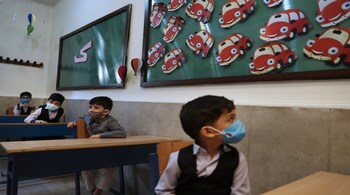
Under the latest unlock guidelines, schools and coaching institutes in India will be allowed to reopen in a phased manner from October 15. States and union territories have been given a free hand to decide whether to reopen schools and coaching institutes.
However, such decisions will be subject to consultation with the school’s or institution’s management after assessing the situation. Attendance will not be mandatory in schools and online classes, and other methods of distance learning will continue to be encouraged in view of the coronavirus situation in the country.
Unlock 5.0 guidelines for reopening schools:
- States and UTs can reopen schools and coaching institutions in a graded manner from October 15 after assessing the COVID-19 situation.
- Online learning methods will continue to be promoted.
- Attendance will not to be made mandatory for students, nor will it be enforced on them.
- Students will still require parental consent to attend schools voluntarily.
- In case schools are conducting online classes and some students prefer online classes to physical classes, then the schools shall not force them to take offline classes.
- Schools that are allowed to reopen, will have to mandatorily follow the standard operating procedures (SOPs) to be issued by the Education Departments of the respective states and UTs.
- States and UTs will have to prepare their own SOPs in line with the detailed SOPs that will be released by the Ministry of Health and Family Welfare in this regard.
- Schools located in containment zones will continue to remain closed.
Notably, the MHA guideline states that the “Department of Higher Education (DHE), Ministry of Education may take a decision on the timing of the opening of colleges/higher education institutions, in consultation with the MHA, based on the assessment of the situation. Online/distance learning shall continue to be the preferred mode of teaching and shall be encouraged.”
Higher education institutions will be allowed to operate for research scholars (PhDs) and post-graduate students in science and technology stream from October 15, since they require laboratory and experimental work.
Discover the latest Business News, Sensex, and Nifty updates. Obtain Personal Finance insights, tax queries, and expert opinions on Moneycontrol or download the Moneycontrol App to stay updated!





