

Amid fears over the onset of a likely third COVID-19 wave, the Ministry of Home Affairs (MHA) has informed the states that the second wave of pandemic is "not over yet".
The MHA, in an advisory issued to the state chief secretaries on July 14, said coronavirus-appropriate behaviour must be strictly followed, and stringent restrictions must be reimposed in areas where the safety norms are flouted.
"It needs to be ensured that if the norms of COVID-appropriate behaviour are not maintained at any establishment/premises/markets etc., such places shall be liable for the re-imposition of restrictions," Union Home Secretary Ajay Bhalla said in his letter to the chief secretaries.
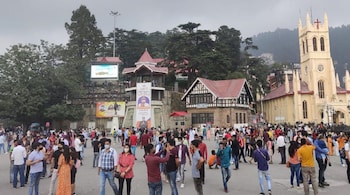
The MHA noted that "blatant violation" of COVID-19 norms had been reported in several parts of India, particularly at hill stations, marketplaces and in public transport.
"Consequently, increase in 'R' factor (reproduction number) in some of the states, is a matter of concern," Bhalla added.
Notably, the increase in R factor above 1.0 is an indicator of rapid spread of COVID-19. The nationwide R factor increased to 0.88 between June 20 and July 7. It was measured as 0.78 in the May 15-June 26 period.
Also Read | IMA says third wave 'inevitable, imminent', warns against 'super-spreader' events
The MHA, in its advisory, noted that "there is no room for complacency" even though the coverage of beneficiaries through the COVID-19 vaccination drive is increasing considerably.
"It is emphasized that the second wave of COVID is not yet over. We ought to remember that while the reach of vaccination is increasing considerably, there is no room for complacency and hence COVID appropriate behaviour must continue," Bhalla said.
Testing needs to be continued with the same vigor, as adequate testing is extremely essential in terms of checking the virus and early identification of cases, the Union home secretary further added.
The Centre's advisory to states comes a day after Prime Minister Narendra Modi marked his disappointment over the visuals of crowding that have emerged from several hill stations over the past few days.
"It is true that tourism and business have been greatly affected due to Corona. But today I will say with great emphasis that it is not right to have huge crowds in hill stations, markets without masks," Modi said during his interaction with the chief ministers of northeast states on July 13.
"We all need to work together to stop the third wave of COVID-19 pandemic," he added.
Discover the latest Business News, Sensex, and Nifty updates. Obtain Personal Finance insights, tax queries, and expert opinions on Moneycontrol or download the Moneycontrol App to stay updated!





