

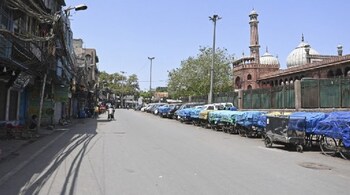
The West Bengal government has announced a complete lockdown starting May 16 till May 30 in a bid to contain the surging COVID-19 cases. The state has ordered the closure of all government and private offices barring essential services.
West Bengal had on May 14 registered its highest single-day spike of 20,846 fresh COVID-19 cases, taking the tally to 10,94,802, the health department said in its bulletin. The toll rose to 12,993 after 136 more people succumbed to the infection, the bulletin said.
Track this LIVE blog for latest news on coronavirus pandemic
Take a look at what's allowed, what isn't during the lockdown in West Bengal:
All transport, including taxis and autorickshaws, will not be allowed to ply for two weeks. However, vehicles can be used for essential services like health, food, milk, media and other emergency services.
All government, private offices other than those involved in emergency services shall remain closed.
All educational institutions shall remain closed.
Metro train services, local trains and intra-state bus services and ferry services would remain suspended.
Trucks and goods vehicles will also not be allowed to ply.
All shopping complexes, malls, bars, sports complexes, pubs, beauty parlours will remain closed during this period.
Petrol pumps will remain open and essential services like milk, water, medicine, electricity, fire, law and order and media will not come under the purview of lockdown.
Movement of private vehicles, taxis, buses will also be disallowed during the 15-day lockdown period.
Marriage ceremony will be allowed with 50 people and in a funeral procession, only 20 will be allowed.
The shops and the market-places will remain open for three hours a day between 7 am and 10 am.
Jewellery and saree shops may remain open between 12.00 and 3 pm only.
Banks and financial institutions will remain open between 10 am and 2 pm.
Sweet shops will be allowed to remain open from 10 am to 5 pm.
E-commerce and home delivery services will be allowed.
No cultural, political, academic, administrative, or religious events and functions will be allowed in the state during the lockdown and no outdoor congregations will be permitted between 9 pm and 5 am.
While industries will be closed, tea gardens will be allowed to function but only at 50 percent strength.
Jute mills will operate with 30 percent workforce.
Automobile repair shops will be allowed to remain open.
Click here for Moneycontrol's full coverage of COVID-19 outbreak
Discover the latest Business News, Sensex, and Nifty updates. Obtain Personal Finance insights, tax queries, and expert opinions on Moneycontrol or download the Moneycontrol App to stay updated!





