

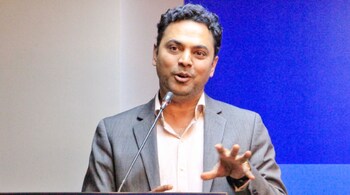
Demand in the economy will increase when the uncertainty regarding health in the wake of COVID-19 outbreak ends, Chief Economic Advisor Krishnamurthy V Subramanian said on Friday.
Speaking at a webinar session organised by Bharat Chamber of Commerce, Subramanian said that discretionary spending in the economy has not risen due to uncertainty regarding health in the wake of the coronavirus outbreak.
Unlike in countries such as the US where people buy food after getting cash transfers, the scenario is different in India.
"In India, we have a public distribution system which provides food to the people. So, people in our country resort to precautionary motive due to uncertainty," he said.
According to him, this uncertainty arising out of the health factor will stay until a vaccine for COVID-19 is developed, and spending will not pick up till then.
"People will save more and the right time for increasing demand is when uncertainty is not there", Subramanian said.
He said the government is cognizant of the fact that there is a need to increase demand in the economy.
He said that the Jan-Dhan account holders have a high marginal propensity to consume, though they are saving more at the moment.
Regarding the Rs 20-lakh crore financial package announced by the government, Subramanian said elsewhere, in the world, particularly in countries such as the US and the UK, the fiscal component in the stimulus packages was 3.5 percent, the balance being monetary and liquidity measures.
"India has exactly done that," he added.
He said that the health sector is now seeing a spurt in demand due to the pandemic while the tourism and hospitality segments have been suffering.
Follow our full coverage of the coronavirus pandemic here.
Discover the latest Business News, Sensex, and Nifty updates. Obtain Personal Finance insights, tax queries, and expert opinions on Moneycontrol or download the Moneycontrol App to stay updated!





