

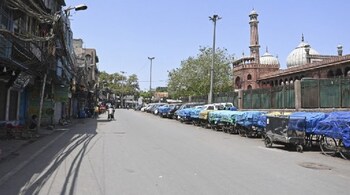
The Delhi government, on April 19, announced imposition of a lockdown in the national capital amid second wave of COVID-19 cases in the country.
As part of the six-day lockdown, a curfew on movement of individuals will be imposed from 10.00 pm on April 19 to 6.00 am on April 26, Chief Minister Arvind Kejriwal said in a televised address.
Follow our LIVE blog for the latest updates of the coronavirus pandemic
Kejriwal said that the lockdown period will be used to arrange oxygen, medicines and add more beds in Delhi.
Here’s what is allowed and what is not allowed in Delhi during the lockdown:
What’s allowed:
Essential services and food and medical services will continue as normal.
Government officers and PSU officials will be allowed to travel on production of valid identity cards.
While weddings have been allowed, the number of people who can attend them has been capped at 50. People travelling to attend marriages will have to show a soft or hard copy of the marriage card.
Attendance at funerals and last rites gatherings has been capped to 20 people.
Persons associated with delivery of essential services, people working at grocery and food stores, daily and milk booths, opticians, meat and fish shops, pharmacies, newspaper distribution units, banks, insurance offices will be allowed to commute during the curfew.
People associated with telecommunication, internet, broadcasting and cable services will be allowed to commute during the curfew.
People associated with petrol pumps, water supply, power generation, private security services, manufacturing units of essential commodities and food delivery will be also allowed to commute during the curfew.
Movement of electronic and print media personnel, pregnant women and patients for getting medical/health service along with an attendant on production of a valid id/doctor's prescription/medical papers.
Stadiums have been permitted to remain open for organising national/international sports events without spectators.
What’s not allowed:
All private offices, shops, shopping centres, malls, weekly markets, manufacturing units, cinemas, restaurants and bars, public parks, gyms, spas and barber shops will remain closed.
All educational and coaching institutions will remain closed.
All social, political, entertainment, academic, cultural, religious gatherings and congregations are prohibited.
Offices of Greater National Capital Territory (NCT) and municipal corporations will remain closed except for units that are involved in essential services.
Detailed guidelines can be accessed here.
Delhi recorded its highest spike of 25,462 new daily COVID-19 cases on April 18. The positivity rate shot up to 29.74 percent – meaning almost every third sample being tested in the city was turning out to be positive.
Delhi was one of the largest hotspots in the country during the first wave of coronavirus infections in 2020.
Click here for Moneycontrol’s full coverage of the coronavirus pandemic
Discover the latest Business News, Sensex, and Nifty updates. Obtain Personal Finance insights, tax queries, and expert opinions on Moneycontrol or download the Moneycontrol App to stay updated!





