

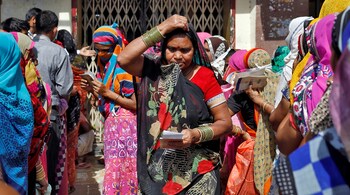
While assessing several key indicators like housing, hygiene, and the health system in Madhya Pradesh, Bihar and Telangana, The Lancet Journal said that these states may be the most vulnerable to the effects of the COVID-19 pandemic.
According to scientists, including Rajib Acharya from the Population Council, New Delhi, vulnerability in the research means the risk of consequences of infection, including spread, morbidity, mortality, and social and economic effects of the pandemic.
The study noted that nine of 30 large states -- Madhya Pradesh, Bihar and Telangana, Jharkhand, Uttar Pradesh, Maharashtra, West Bengal, Odisha, and Gujarat -- have high vulnerability to be impacted by the COVID-19 pandemic.
It rated the vulnerabilities of the states to the pandemic on a scale from zero to one, measured using 15 indicators across five domains -- socioeconomic, demographic, housing and hygiene, epidemiological, and health system.
"Our index aims to help planners and policy makers effectively prioritise regions for resource allocation and adopt risk mitigation strategies for better preparedness and responses to the COVID-19 epidemic," the scientists, including Rajib Acharya from Population Council, New Delhi, noted in the study.
They identified a number of vulnerable districts in India, which currently do not have large numbers of COVID-19 cases but could be strongly impacted by the pandemic.
They said a number of districts in the nine large states -- Bihar, Madhya Pradesh, Telangana, Jharkhand, Uttar Pradesh, Maharashtra, West Bengal, Odisha, and Gujarat -- located in every region of the country except the northeast, had high overall vulnerability.
According to the researchers, these states also had high vulnerability with respect to most of the five domains.
Coronavirus India News LIVE Updates
Madhya Pradesh had an overall vulnerability score of one, with Sikkim on the other end with a score of zero, making it the least vulnerable.
Arunachal Pradesh and Himachal Pradesh were two other states on the lower overall vulnerability end of the scale.
"Although our intention was not to predict the risk of infection for a district or a state, we observed similarities between vulnerability and the current concentration of COVID-19 cases at the state level," they wrote in the study.
However, the researchers said this relationship was not clear for districts, adding that better data collection at this regional level can help make more refined evaluations of vulnerability in their respective states.
They also added that data used in the study are two to five years old and might not have captured vulnerability well in districts in which rapid changes have occurred up to the present day.
Follow our full coverage of the coronavirus pandemic here.
(With PTI inputs)
Discover the latest Business News, Sensex, and Nifty updates. Obtain Personal Finance insights, tax queries, and expert opinions on Moneycontrol or download the Moneycontrol App to stay updated!





