

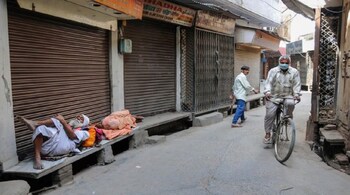
The Goa government on July 4 extended the COVID-19 curfew across the state by a week till July 12 but also announced a few relaxations in restrictions.
The state recorded 164 new cases on the day, taking its total tally to 167,436. It also registered 4 deaths, taking the fatality count to 3,073.
Relaxations were announced by state Chief Minister Pramod Sawant on July 4 and will remain in place till July 12.
Follow our LIVE blog on the COVID-19 pandemic here
What is allowed?
- Social, political, cultural gatherings allowed for up to 100 people or 50 percent of venue capacity.
- Marriages and other congregations are also allowed for up to 100 people or 50 percent of venue capacity.
- Bars and restaurants are allowed to operate between 7 am and 9 pm with 50 percent capacity.
- Buses allowed to operate with 50 percent capacity only for particular duties and for medical emergencies.
- Medical shops, pharmacies and health services, and institutions are allowed to operate.
- Shops within municipal or panchayat premises allowed to operate between 7 am and 6 pm.
- Home delivery services allowed for all items, except liquor.
- Banks, insurance, customs clearance, ATMs, and microfinance institutions allowed to operate.
- Supply chain-related facilities for retail, e-commerce, cold storage, or warehousing facilities are allowed to operate.
- In-house canteen facilities in permitted organisations/companies allowed to operate only for in-house staff.
- Industries and related activities are allowed.
- Construction activities, including repair works and shops related to this work are allowed to operate.
- Agricultural and related activities are allowed.
What is not allowed?
- Night curfew will remain in effect. The curfew was first imposed on May 9 amid the second wave of coronavirus cases in the state and has been since periodically renewed.
- Indoor sports complexes, auditoriums, community halls, or similar places, will continue to remain shut during the curfew period.
- Casinos in the state will continue to remain shut for at least till July 12.
- River cruises, water parks, and entertainment parks will also continue to remain shut during the curfew period.
- Further, gyms, spas, massage parlours, cinema halls, theatres, and other establishments will not be allowed to open during the curfew period.
- All educational institutes, schools, colleges, and coaching institutes to remain shut for students, except for competitive examinations – subject to prior permission from authorities.
- Shops, weekly markets – except those specified, are also not allowed to open.
- Religious places are not too open for the public.
- Inter-state movement of people is also restricted with few exceptions such as for goods vehicles (two drivers and one helper) if the traveler has a negative COVID-19 test report (max 72 hours), or for medical emergencies.
For full coverage on the coronavirus pandemic click here
(With inputs from PTI)
Discover the latest Business News, Sensex, and Nifty updates. Obtain Personal Finance insights, tax queries, and expert opinions on Moneycontrol or download the Moneycontrol App to stay updated!





