

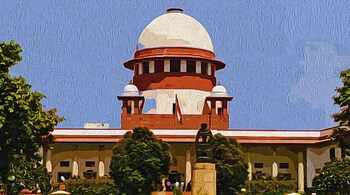
Closing courts for long due to the coronavirus pandemic is a "self-destructive idea", senior advocate Rakesh Dwivedi has said in a letter to the Chief Justice of India and Supreme Court judges and also suggested how courts can function respecting social-distancing norms.
He suggested that all courts can sit with 25 cases and no client should be allowed in the court.
"Closing courts for long is a self-destructive idea. Courts are sentinels of fundamental rights. There are backlogs. Vital interests of the people are involved and the cases are in quarantine. Video conferencing is like putting the court in ICU on oxygen. So how do we go about to restore a slightly better functioning," the lawyer wrote to CJI Justice S A Bobde on Saturday.
He has suggested that judges and lawyers wear masks as well as gloves and as judges sit on the dais, they are separated from lawyers by a good distance. They themselves can sit five feet apart, he suggested.
"All courts sit with 25 cases each. On hearing days 5 cases and 5 final disposals. Employees can be divided into two groups, each working for a week. They can be tested beforehand and sanitized. Very few employees should approach the judges. Preferably not more than 2. Cases should be further divided hourly basis. 5 cases per hour. So lawyers in court are few.
"For Every case, only 2 seniors with one junior should be allowed entry. No client should be allowed in court. Lawyers must leave court once their case is over. Their clerk too. Filing can be by internet only. No intern should be allowed. In my view with suitable changes this scheme can work with safety," he wrote adding that all lawyers chamber, canteens and library may remain closed.
Dwivedi said that keeping the Supreme Court closed or in conference mode for long may not be in national interest.
"With little functioning of the court the checks and balances is absent. Amidst the pandemic war the Apex court must remain Awake to the maximum extent possible," he said in his letter sent through the Supreme Court Registrar.
The Supreme Court Bar Association (SCBA) Saturday had appealed to the CJI and his companion judges to declare cancellation of summer vacation and treat it as working period of the apex court in the larger interest of the litigants and interest of Justice in view of ongoing nationwide lockdown to prevent the spread of coronavirus.
The lawyers' body said that now that the first phase of lockdown is drawing to an end on April 14, 2020, and there is a strong possibility of similar or varying restrictions continuing thereafter, it believes that it is time for the Chief Justice of India and the companion Judges to take further proactive measures.
Discover the latest Business News, Sensex, and Nifty updates. Obtain Personal Finance insights, tax queries, and expert opinions on Moneycontrol or download the Moneycontrol App to stay updated!





