

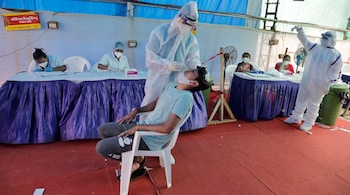
India’s COVID-19 case tally now above 1.22 crore with 72,330 new cases reported as per the health ministry’s April 1, 2021 update. New cases reported 35 percent increase in a single day, highest new cases reported since October 11, 2020 or in 172 days.
India reported 459 new deaths (highest in 116 days or since December 6) and 40,382 new recoveries in the last 24 hours, the latest release shows. More than 6.51 crore vaccinations have been administered across India, according to the April 1 update, with 20,63,543 new vaccinations reported in a day.
Of the total vaccinations administered till date, 86 percent are recipients of their first dose while 14 percent have received the second dose. Among states, Maharashtra has administered the most 6.21 million vaccine doses, followed by Rajasthan (5.72 million) and Gujarat (5.70 million).
India now ranks 5th in the world with 5,84,055 active cases, an increase of 31,489 cases in 24 hours as per the April 1 update. Maharashtra now reports the most (3,57,604 or 61 percent) active cases in the country, followed by Karnataka (28,267) and Kerala (25,559).
Maharashtra reported the most (39,544 or 55 percent) new cases in the last 24 hours, followed by Chhattisgarh (4,563), Karnataka (4,225), Punjab (2,944) and Kerala (2,653). These five states account for 75 percent of all the new cases reported in India.
Maharashtra also reported the most 227 or 49 percent new deaths, followed by Punjab (55), Chhattisgarh (39), Karnataka (26), Tamil Nadu (19) and Kerala (15). These six states account for 83 percent of all the new deaths reported across the country.
About 16 states and union territories did not report any deaths today. These include: Andaman and Nicobar, Arunachal Pradesh, Chandigarh, Dadra and Nagar Haveli/Daman and Diu, Jharkhand, Ladakh, Lakshadweep, Manipur, Meghalaya, Mizoram, Nagaland, Odisha, Puducherry, Sikkim and Tripura.
India’s recovery rate further slides down to 93.9 percent while positivity rate up by 5 percent. Maharashtra recorded 23,600 new recoveries, the most, followed by Punjab (2,788), Kerala (2,039), Gujarat (2,004) and Tamil Nadu (1,527).
The total recoveries in India are now over 1.14 crore while total deaths now stand 1,62,927 as per April 1 update. The mortality rate in the country is at 1.3 percent with Punjab reporting the highest (2.9 percent). More than 11 lakh daily tests reported as on March 31 with more than 24.47 crore tests carried out till date.
Despite the high number of cases and deaths reported by India, the country fares better when compared with other nations in terms of per million population.
Discover the latest Business News, Sensex, and Nifty updates. Obtain Personal Finance insights, tax queries, and expert opinions on Moneycontrol or download the Moneycontrol App to stay updated!





