

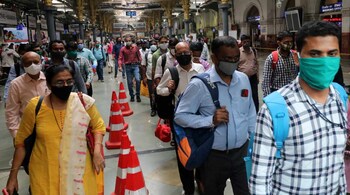
The government would be launching a massive behavioural change campaign in the next one week to tackle COVID-19 pandemic.
"We feel that there is a laxity in individual behaviour; we are worried about upcoming winter and festival seasons, so to work on the prevention side is even more important," said NITI Aayog Member VK Paul.
The campaign will be disseminating messages about using masks, physical distancing, hand hygiene, use of Ayush products and protecting the elderly.
"These messages are well aware of, but these have to be taken to such a loud level that everybody would hear. We think there is a huge potential for change," Paul said.
The easing of COVID-19 lockdowns has coincided with the rise in the number of cases and deaths. Close to one lakh people have died and 6.3 million people are infected with the disease so far.
COVID-19 is spread from person to person through small droplets from the nose or mouth which are spread when a person with COVID-19 coughs or exhales. These droplets land on objects and surfaces around the person. Using face masks, hand hygiene and physical distancing has become imperative. But people are seen flouting these norms extensively.
Paul said there is still at least 3-4 months window before the launch of a vaccine, and until then prevention is the only effective option.
Currently, the number of COVID-19 cases that require intensive care unit (ICU) beds and ventilators are on the rise, resulting in a huge burden on health infrastructure.
Discover the latest Business News, Sensex, and Nifty updates. Obtain Personal Finance insights, tax queries, and expert opinions on Moneycontrol or download the Moneycontrol App to stay updated!





