

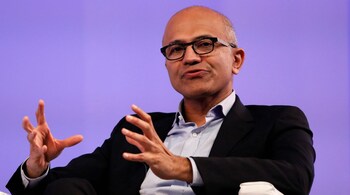
Microsoft CEO Satya Nadella said in an interview on September 9 that companies that are forcing their employees to report to office amid rising COVID-19 Delta variant cases are “short-sighted”.
Nadella told CNBC: “I am looking forward to the entire world overcoming this challenge, because until we do so any particular company, region thinking they have found the answer, I think will just be short-sighted.”
The Microsoft CEO added that there is no one-size-fits-all approach to hybrid work as employee expectations keep changing. He said: “The only way for organizations to solve for this complexity is to embrace flexibility across their entire operating model, including the ways people work, the places they inhabit, and how they approach the business process.”
Also read: Nearly half of Microsoft employees want to work from office
His statement came a day after Microsoft told its United States employees that it has delayed their return to offices indefinitely. Microsoft had already announced that it is postponing its plan to reopen workplaces from September 7 to October 4. Now, they have postponed it indefinitely.
Notably, Microsoft had already announced that it is postponing its plan to reopen workplaces from September 7 to October 4. Now, they have postponed it indefinitely.
Explaining why no date has been announced for the reopening of Microsoft offices, Jared Spataro, Corporate Vice-President, wrote in a blog post: “Given the uncertainty of COVID-19, we've decided against attempting to forecast a new date for a full reopening of our US worksites.”
He further informed that Microsoft will not announce a date until there is guidance from public health offices on when it is safe to return to work. Even when Microsoft decides to reopen its offices, employees will get a 30-day transition window to prepare.
Discover the latest Business News, Sensex, and Nifty updates. Obtain Personal Finance insights, tax queries, and expert opinions on Moneycontrol or download the Moneycontrol App to stay updated!





