

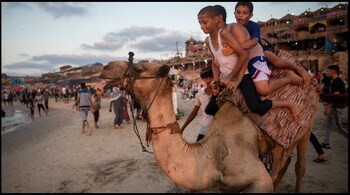
Enthusiastic Indians are all set to take advantage of an extended vacation in the middle of August, significantly boosting sales for travel agents, airlines and hotels for the period from August 9 to August 21.
All that travellers have to do is combine a series of public holidays with a few days off from work and they are set for a break. August 9 - Muharram, August 11 - Raksha Bandhan, August 15 - Independence Day, and August 19 - Janmashtami, are public holidays in India.
Bookings and inquiries at online travel agents MakeMyTrip, Yatra.com, IxiGo, EaseMyTrip, Booking.com, Thomas Cook (India), and SOTC Travel have surged 30-50 percent.
“At Yatra.com, we have witnessed a significant increase of 30 percent in booking inquiries as people are once again geared up to make the most of the lost holidays,” said Aditya Gupta, senior vice president.
EaseMyTrip cofounder Rikant Pittie said his company has seen up to 40,000 forward flight bookings and about 700 hotel bookings for the extended weekend (August 11-15). He added that bookings are expected to be made in the coming few days and the total estimated rise in bookings would be 30-40 percent.
Indians who prefer to travel domestically are eyeing destinations in Goa, Rajasthan, Himachal Pradesh, Karnataka, Kerala, Uttarakhand, Maharashtra and Tamil Nadu.
“Goa, Udaipur, Jaipur, Pondicherry, Lonavala, Wayanad, Ooty and Rishikesh are some of the most-booked destinations,” said Vipul Prakash, chief operating officer at MakeMyTrip.
On the international front, short-haul destinations such as Singapore, Thailand, Vietnam, Dubai, Bali, the Maldives and Mauritius are popular.
Last-minute travellers
The travel rush has led to a steep rise in prices of tickets for last-minute travellers. Domestic and international airfares from New Delhi, Mumbai, Bengaluru, Chennai, and Kolkata have surged by almost 50 percent in the past week, airline officials said.
International ticket prices have also risen by 30-40 percent for Dubai, Abu Dhabi, Sharjah, Muscat, Doha, Bangkok, and Singapore.
“Flights to most popular tourist destinations from the metro cities have risen by at least 50 percent in the last week and are likely to rise more as people are still making plans,” a senior airline official said.
Delhi-Goa airfares for August 12-15 have risen to about Rs 18,000 at the moment from Rs 11,000 last week, he said.
Even trains are being booked for the long weekend.
“Most trains are full in no less than a month in advance. Some railway zones, for example, South Central Railways, are running special trains on high-traffic routes. Waitlist numbers are touching triple digits for some routes,” said Sripad Vaidya, cofounder of Confirmtkt, a train ticket booking platform.
Hotel reservations are getting tough, too.
“The spike as compared to normal days is almost 3-4 fold and we have only few higher categories and suites remaining to be sold. We are expecting a full house for the weekend, which is approximately a 30 percent jump from the normal daily occupancy,” said Manoj Thapa, general manager at The Nest Resort in Jaipur.
Thapa also expects local clientele to boost spending on food and beverages.
Travellers are looking at hotels for more premium, high-end holidays.
Unique accommodation
“Our demand trends indicate an increasing preference for eclectic stays and unique accommodation like heritage bungalows, havelis/palaces, forts, in the heart of the desert or a bamboo grove, tree houses or tea estates/coffee plantations,” said Rajeev Kale, president of Thomas Cook (India).
Rajneesh Kumar, general manager at Courtyard by Marriott Aravali Resort in Faridabad, said most of the demand is from travellers from the National Capital Region, Jaipur and Agra.
“Currently, we are looking at a 40 percent occupancy level but with the long weekend around the corner, we are expecting to hit at least 80 percent of the occupancy level and a hike of 5-7 percent in room rates,” Kumar said.
Mehul Sharma, founder of Signum Hotels & Resorts, which operates 12 hotels across India, said there has been a 20 percent rise in queries for the upcoming long weekend.
“We are operating at 85 percent occupancy level and for the long weekend, our occupancy will reach up to 95 percent. For the long weekend, our average rate is around Rs 4,500, up from Rs 4,000,” he added.
Shyam Kumar, general manager at DoubleTree by Hilton Agra, said the Independence Day weekend was sold out much in advance.
“For the upcoming August 15 long weekend, room bookings have experienced an increase by 25-30 percent and the average daily rate for this festive weekend ranges from Rs 8,500 to Rs 10,000, which on other weekends is Rs 5,500-Rs 6,000 per night,” he said.
When it comes to the most preferred destinations, Yazad Marfatia, regional director at the Park Hotels, said demand is the highest for its properties in Visakhapatnam and Goa.
“We are sold out for most of the days due to small wedding groups and strong leisure demand and seeing 40-45 percent increase in rates for leisure destinations,” he said.
Manoj Agarwal, head of asset management at InterGlobe Hotels, which operates the Ibis network of hotels, said there is strong demand for destinations such as Goa, Nashik and Jaipur. He expects the average room rate in August to be 10 percent higher over July and 50 percent higher on the long weekend compared to other weekends.
Mahindra Holidays and Resorts said demand is high at hill station resorts such as Kandaghat, Safari Corbett, Naldehra, Cherai, Coorg and Virajpet.
Shreyas Kudalkar, owner of Kings Hotel & Resort, said travellers also prefer destinations such as Alibaug, Lonavala, Karnala and Mahabaleshwar, among others.
Discover the latest Business News, Sensex, and Nifty updates. Obtain Personal Finance insights, tax queries, and expert opinions on Moneycontrol or download the Moneycontrol App to stay updated!





