

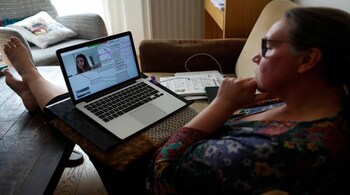
It has been more than a week in which a majority of the population has been working from home (WFH) since the lockdown was enforced starting March 25 to control the spread of novel coronavirus.
However, the past few days, it would seem, has been more of a revelation for some as they spend more time with their families, partners, and even their work.
Most of the techies in the garden city started WFH on a positive note. Take for instance Sunita K, who works in Electronic City and used to commute for close to three hours and at times six to and back from work. She developed health issues and had almost quit her job due to long hours of travel on buses.
“I was happy at the prospect of working from home during lockdown,” she said.
But a week down, she has changed her opinion. The past 10 days have made her more anxious, overworked and she remains on call with one of her colleagues or another just so she could get a sense of being a part of the team.
"I went crazy," she admitted.
For her, having a cup of coffee and the informal chat that followed with her colleagues was a stress buster. Minus all that and replace it with just work and more work at home and office fronts, she lost her cool.
Amrita K, a communication professional in the city, is in a similar boat. But for her, WFH is presenting its own challenges with both she and her husband at home.
Irregular division of household chores and constant bickering has strained the marriage. “Sure, we have divided our chores. He does the cooking, which he loves and does it only when he wants," she complained.
"So all the cleaning and dishes and everything else from including bathroom cleaning fall on me. Also cooking when he does not cook,” she said.
Both women now cannot wait to get back to work even if it would mean long travel hours or get stuck in traffic.
Sunita and Amrita aren't alone. They join thousands, men and women, who are looking forward to getting back to office to meet their team braving the Bengaluru traffic.
Why? Is WFH a bad option?
This is not to say that WFH is a bad option and it has its advantages. It improves productivity, saves travel time and physical workspaces. For new mothers, especially, WFH could be a boon. But as a concept, it is overrated and is unlikely to replace offices and physical workspaces as many project it to be, say experts.
Interpersonal conversations help in creativity and innovation
As a New York Times article pointed, while WFH improves productivity and saves us travel time and unnecessary distractions, it does not stimulate innovation.
On the other hand, the article points out, working with a team nurtures creativity and helps solve problems faster than those working remotely. Interpersonal interactions and discussion become important for innovation, it added.
That is probably why WFH will probably not be the norm going forward, at least in the immediate future.
After all, one cannot underestimate the importance of social interactions in workplaces and underestimate water cooler talks and gossips over a cup of chai!
Discover the latest Business News, Sensex, and Nifty updates. Obtain Personal Finance insights, tax queries, and expert opinions on Moneycontrol or download the Moneycontrol App to stay updated!





