

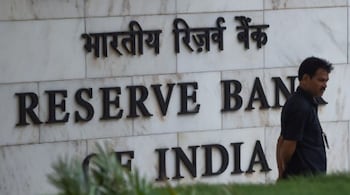
The Reserve Bank of India (RBI) may reduce the limit of Incremental Cash Reserve Ratio (I-CRR) to 5 percent from 10 percent of the increase in Net Demand and Time Liability (NDTL) on or before September 8, Upasna Bhardwaj, Chief Economist, Kotak Mahindra Bank, told Moneycontrol in an exclusive interview on September 1.
The central bank will review the I-CRR on September 8 or earlier with a view to returning the impounded funds to the banking system ahead of the festival season.
“We see a high probability of RBI retaining the I-CRR but they may tweak the 10 percent to 5 percent,” Bhardwaj said.
This is because Bhardwaj expects the inflows on account of government spending will offset most of the outflows of advance tax and goods and services tax (GST) payments by the end of the month and bring liquidity towards a neutral zone.
Bhardwaj said if the I-CRR were to be reversed, we may again see liquidity surplus at levels that RBI in the current environment may not be comfortable with.
On August 10, the central bank said that with effect from the fortnight beginning August 12, scheduled banks will have to maintain an I-CRR of 10 percent of the increase in their net demand and time liabilities (NDTL) between May 19 and July 28.
This narrowed the surplus liquidity by over Rs 1.42 lakh crore as on August 13. The outflow on account of I-CRR was broadly in line with estimates outlined by RBI Governor Shaktikanta Das and market players.
At a press meet after the last Monetary Policy Committee (MPC) meeting, Das had said that the I-CRR will suck out about Rs 1 lakh crore. Liquidity narrowed due to heavy GST outflows and auctions.
Also read: LPG price cut may impact 30-40 bps on inflation in coming months, says Upasna Bhardwaj
Liquidity condition
Currently, the liquidity in the banking system is estimated to be in surplus of around Rs 80,233.57 crore, according to the RBI’s money market operation.
As per a Kotak Mahindra Bank’s report on August 28, there is an expectation of inflows of Rs 1.10 lakh crore from government spending and Rs 52,827 crore of coupon inflows and redemptions of treasury bills and SDL during the week from August 26 to September 1.
The total outflows expected were Rs 67,900 crore from the banking system due to the auction of T-Bills, state loans and central government securities.
Also read: India’s crude oil imports from Russia slipped 23% in August from last month: Vortexa
RBI’s take
Prior to the introduction of I-CRR, the central bank conducted various variable rate reverse repo auctions to remove excess surplus liquidity from the banking system.
The RBI also conducted various auctions of various tenures as short as overnight auction.
Still, the liquidity remained in huge surplus, which pushed short-term rates, especially overnight call money rates, sharply below the repo rate.
The surplus liquidity in the system has gone up in recent months on the back of the return of Rs 2,000 banknotes to the banking system, RBI’s surplus transfer to the government, and a pick-up in government spending and capital inflows.
The overall daily absorption under the liquidity adjustment facility (LAF) was Rs 1.7 lakh crore in June and Rs 1.8 lakh crore in July 2023.
In the August monetary policy, RBI Governor Shaktikanta Das said I-CRR is purely a temporary measure for managing the liquidity overhang. Even after this temporary impounding, there will be adequate liquidity in the system to meet the credit needs of the economy.
However, RBI Deputy Governor Michael Patra in the Monetary Policy Committee meeting last month said a risk to the inflation outlook stems from the liquidity overhang in the banking system, according to the minutes of the meeting.
“Withdrawal of excess liquidity should engage primacy in the attention of the RBI going forward as it presents a direct threat to the RBI/MPC resolve to align India’s inflation with the target, besides the potential risks to financial stability,” Patra said.
Discover the latest Business News, Sensex, and Nifty updates. Obtain Personal Finance insights, tax queries, and expert opinions on Moneycontrol or download the Moneycontrol App to stay updated!





