

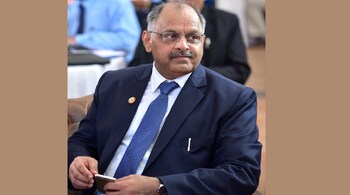
Central and state governments, the insurance regulator, insurers and hospitals are working towards evolving some standardisation in COVID-19 treatment charges, New India Assurance Chairman and Managing Director Atul Sahai, also the chairman of General Insurance Council, tells Preeti Kulkarni in this exclusive interview.
What was New India’s experience with managing the business in the first quarter of 2020-21?
The three months (April-June) have been quite challenging. The industry has seen a decline of 9-10 per cent, though New India has grown by around 6 per cent. We did not see a dip in any of the three months. So, we are rather happy that we have defied the trend. Barring motor, aviation and marine, we have done well. Now, vehicles are not getting sold, cargo is not moving and aviation is badly hit, so these three segments are especially impacted. On the other hand, personal accident, health, property and miscellaneous are showing growth for us.
What were the challenges New India Assurance encountered while handling COVID-19 claims?
We have maintained a good turnaround time for claim settlement. We have been proactively reaching out to clients, creating portals and email IDs, to enable them submit their claims online. We receive over 1,500 queries every day on an average and we respond to all. In terms of claims, we have received over 9,000 so far. Of these, we have extended cashless facilities to over 90 per cent of the cases so far, which means that they were settled almost immediately. The rest are reimbursement claims and, even in such cases, we have settled 50 per cent of the claims where patients were discharged. Others are still in hospital. In some cases, we have even made advance payments.
What is the average COVID-19 claim size for New India?
It is now hovering around Rs 1.1 lakh. Initially, it was around Rs 1.3 lakh. The size has started coming down with passage of time. Initially, the cost of PPE kits and disposables was quite high, but the government encouraged manufacturers to ramp up production. So, the price has come down, thanks to the increased supply and economies of scale they have been able to achieve. This has led to lower claim sizes too.
The IRDAI has asked insurers to take action against hospitals that deny cashless facilities despite being part of the network. What has been your experience with hospitals?
We are an old, established company with a strong preferred provider network (PPN). Overall, 90 per cent of our claims were settled on a cashless basis. Insurers need to have strong communication channels to ensure better understanding with hospitals. In our case, our officials were constantly in touch with hospitals and policyholders to resolve any kind of grievances. There could have been stray cases of unethical behaviour on the part of some hospitals, but we cannot generalise. We have registered over 9,000 claims, but received only 58-59 complaints related to various issues. Even these were resolved quickly, as we ensured that there was no communication lag.
But disputes between hospitals and insurers on standardisation of certain charges, particularly PPE kits and sanitisation charges, continue…
PPE kits were expensive initially; what could the hospitals have done? The only aspect was utilisation of these kits – if 5-10 were being used for a single patient, then that was not right. But due to our PPN experience, we were able to resolve all these issues quickly. Another advantage that public sector insurers have is the third-party administrator network, which strengthened our efforts. These are professionals and they helped PSU insurers deal with this issue effectively. We were able to manage the volume and complexity of cases.
Can we expect a consensus on standardisation soon, after discussions between the GI Council and hospitals?
We are in discussions. We are trying to bring about some uniformity in various charges. Hospitals have reached out with their issues. IRDAI, central and state government, insurers and hospitals are working towards this. We hope that a consensus will emerge.
But will all hospitals accept the General Insurance Council’s indicative rate card?
GI Council rates are not binding, but indicative. Wherever the hospitals are charging more, they will have to provide explanations. Insurers are not trying to decide what kind of treatment a COVID-19 patient needs or the number of days he or she needs to stay in the hospital. That is for the doctors to decide. But we have doctors on our (General Insurance Council’s) panel and TPAs. They can have a say on the charges hospitals levy for particular type of rooms, charges for PPE kits and other consumables. They will not comment on medicines and treatment procedures – that is for the hospitals to decide.
But where does this leave policyholders who see deductions from their claim amount? What is the way out for them?
Every health insurance policy comes with a reasonable and customary charges clause. We collect a certain amount as premium – the pool is limited. If it is uniformly distributed, it will benefit many. Besides, we are reaching out to hospitals to understand their concerns over the rates. We have also taken into account rates prescribed by governments in some states. We are in discussions with hospitals so that customers do not suffer.
Corona Kavach premiums seem affordable, despite the risks involved, given the rate of increase in COVID-19 cases in India. How did you arrive at these premiums?
The pricing is based not just on common assessment, but also actuarial studies based on the current trend of claims – their severity and frequency - on a pan-India basis.
Also to add, these are unprecedented times. There is a huge demand for health covers for COVID-19. No one anticipated such a crisis and its financial implications. People with family floater policies realised that their covers were not enough in case of any unfortunate exposure for more than one member of the family.
Discover the latest Business News, Sensex, and Nifty updates. Obtain Personal Finance insights, tax queries, and expert opinions on Moneycontrol or download the Moneycontrol App to stay updated!





