

Anubhav Sahu Moneycontrol Research
If the sudden decline in oil prices and the apparent change in the Federal Reserve’s stance was not enough, the takeaways from the recently concluded G20 meet is boosting risk appetite. Among its key highlights, US agreed not to escalate tariffs from 10 percent to 25 percent on imports of $200 billion Chinese goods for a 90 day period and utilise the time window for trade talks. China, US President Donald Trump said, has agreed to reduce tariffs on US cars exported to the country and substantially increase US imports.
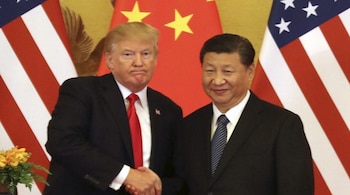
Contours of the trade truce On the sidelines of the G20 meet, Trump and Chinese President Xi Jinping agreed to a truce in the ongoing trade war with a pause on escalation of tariffs. The US had earlier planned to increase tariffs on imports of $200 billion worth of Chinese goods from 10 percent to 25 percent from January 1, 2019. In reciprocation, China has agreed to substantially purchase agricultural, energy, industrial and other products from the US. Further, China and US would immediately negotiate on forced technology transfer, intellectual property protection, non-tariff barriers and cyber theft.
Among finer aspects, China is expected to reconsider the Qualcomm-NXP Semiconductors deal. However, it may be too late for Qualcomm, which earlier paid a hefty breakup fee ($2 billion) and doesn’t consider its Dutch peer as a prospect now.
Automobile tariff reduction China, Trump said, has agreed to reduce tariffs on imported cars from the US. Tariffs on the same are about 40 percent and in a normalised state of affairs (read as a world devoid of trade wars) is expected to be about 15 percent. Of the cars imported into China, about 27 percent, in value terms, come from North America. While the possibility of lower tariffs exist, the magnitude and the duration in which tariffs would be lowered is not clear.
Mutual compulsion to negotiate at some point As we highlighted earlier this year, telltale signs from leading Chinese Indicators (PMI) are concerning. Chinese macro-economic data have been weighed by deteriorating trade outlook and domestic woes. The World Trade Organisation’s trade outlook downgrade emphasized the same. In the latest Caixin PMI data, new export order index have dropped to 47.7 in November from 48.8 in October. For reference, a reading below 50 indicates contraction in activity.
Fed had as well highlighted growing risk of a full-fledged trade war. Mentions from the Beige book report and minutes of the last few Fed meetings said developments related to US’ trade policy is posing downside risks to their growth forecasts. In agriculture exports, for instance, US soybean exports to China is about 2.3 percent of last year in volume terms. A severe adverse impact have been noted for pork and cotton exports as well.
In this backdrop, a negotiation was in the offing. It was believed that after the US mid-term election, Trump’s rhetoric might moderate and in the bipartisan set-up a more conciliatory approach may be initiated. To that extent the play book has unfolded as per expectations.
But would it be unidirectional would be too naïve to expect.
Earlier attempts for truce, talks and trade deficit There have been earlier attempts at reducing the US trade deficit. In May, China agreed to buy more US goods, stop tariffs on Sorghum. US agreed to a deal that will allow ZTE Corporation to resume business. There have been few stop and go arrangements before like postponement of tariffs and truncation of trade goods list for tariff imposition. However, this is first time a systematic period has been carved for negotiations. Also, this comes at a time when ominous signs of a growth slowdown is already being seen in terms of numbers and surveys.
Tussle for technological leadership Progress on technology transfer, intellectual property protection and cyber theft might emerge as the key areas for negotiation. It is no secret that US considers its technological prowess under threat due to China’s endeavour to leap frog in the high technology areas. China in its ‘Made in China 2025’ plan has kept domestic technology as the cornerstone of this strategic plan.
S&P 500 & seasonal volatility The short term reprieve in equity markets have an interesting context of seasonality. The last two months of 2018 have historically exhibited strong seasonality as far as higher S&P 500 returns and elevated volatility is concerned. Current geopolitical context suggest that improved risk appetite can propel equity returns, more so for emerging markets in the short term. At the same time, equity market volatility is still expected to remain elevated as the policy uncertainty has shot up post the G20 meet. Factors contributing to it are not just the Sino US trade war dynamics but also the oil price uncertainty. After the steep decline in oil prices, Saudi Arabia and Russia, on the sidelines of G20, have extended their production cut pact. Canada’s largest oil producing province Alberta has also announced a production cut.
Economic policy uncertainty index (based on news flow)
A series of central banks meets -- RBI (December 5), ECB (December 13) and Fed (December 18-19) -- brings the interest rate trajectories into focus. Among the most awaited is the Fed meet, where more explanations are warranted on its neutral rate stage and prospects.
For more research articles, visit our Moneycontrol Research page
Discover the latest Business News, Sensex, and Nifty updates. Obtain Personal Finance insights, tax queries, and expert opinions on Moneycontrol or download the Moneycontrol App to stay updated!





