

‘La Panthere Noire’, the French media used to call the supremely elegant woman who arrived in Beijing in the spring of 1971, her famous Collier Van Cleef and Arpels jewellery dialled down just so in deference to the sensibilities of a city mired in the Cultural Revolution. Princess Ashraf Pahlavi—twin sister of Iran’s emperor; owner of luxury homes in Paris, New York and Monte Carlo; once targeted for assassination, perhaps appropriately, while leaving a Cannes casino in her Rolls-Royce—had a focussed mission: to charm China’s dour regime into submission.
The historical record does not tell us what Premier Chou Enlai, dressed in his usual dour black suit, made of this Rara Avis and her French couture feathers. But this we know: Princess Ashraf’s efforts, to the fury of Iran’s communist opposition, led to the opening of formal diplomatic relations and a growing trade relationship.
And the historical record tells us this one, more important, thing. In less than a decade, Princess Ashraf had been swept out of power, to be replaced by an austere theocracy. But the China-Iran relationship continued to flower. In geopolitics, the actors on the stage are impermanent; the script they read from isn’t.
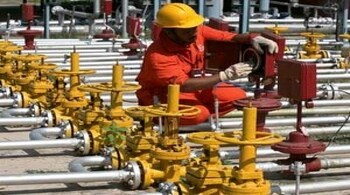
This past week, news has emerged that India is set to lose its rights to prospect in the Farzad-B gas field—among the world’s largest hydrocarbon reserves. ONGC Videsh had been planning to invest some $11 billion in Farzad B, but reports have surfaced over the last year that Iran had decided to give rights to develop the field to an Iranian company instead. New Delhi’s reluctance to violate United States sanctions on Iran and disagreements over terms have been cited as reasons for the end of India’s decade-long Farzad B pursuit.
In some senses, this matters less than it seems. Large-scale production of shale oil and gas in the United States has transformed the global hydrocarbon market, rendering irrelevant the fears which one drove countries like India to see captive production sources. Iran is going to have to find somewhere to sell its natural gas—and as long as India has cash, there’ll be plenty to buy.
There is reason, of course, to suspect the end of India’s prospecting hopes at Farzad-B have something to do with the looming China-Iran strategic partnership agreement, now at draft stage, which is reported to involve $400 billion in investments over a 25 year period.
Earlier this summer, Iran announced it would be beginning work on the Chabahar-Zahedan railway line without Indian participation—again, a consequence of Indian reluctance to put up funding in the face of sanctions. The economic rationale for the project, moreover, has dimmed now even hardened optimists no longer believe Afghanistan’s mineral resources will be available for commercial exploitation any time soon.
For India’s foreign policy establishment, though, the Iran story poses a more fundamental problem: how might India secure its regional interests, in the face of competition from the superpower next door? In Bangladesh, Nepal and Sri Lanka, China has proved willing to buy leverage with cash India simply cannot bring to the table; across the wider neighbourhood, too, China is deepening its relationships, notably with the United Arab Emirates and Saudi Arabia.
In Iran’s case, too, the relationship is shaped by hard cash. Ever since 2010, China is estimated to have invested $18.22 billion in Iran’s sanctions-hit economy, gaining a significant role in everything from Tehran’s metro system to railways, ports and telecommunications. The investments are sometimes oversold—China has invested $54 billion in Pakistan during the same period, and over $25 billion in West Asia’s most dysfunctional economy, Egypt—but the cash has helped Iran survive brutal sanctions imposed by the United States.
Last month, Minister of State for External Affairs V Muraleedharan bravely told the Lok Sabha that India’s “relations with Iran stand on their own footing and are independent of its relations with third countries”. The sad truth is they don’t.
The keys to understanding China’s ambitions along India’s western periphery lie in the United States’ diminishing role in West Asia. Following the war of 1939-1945, the United States involved itself in the region to secure control of its critical hydrocarbon resources. The United States no longer needs that energy, and has ever-less interest in upholding the regional order. Largely dependent on West Asia’s oil and gas to feed its growing economy, China has moved to fill the gap.
Earlier this month, China’s Foreign Ministry said it was pushing to create a new regional council, to broker an understanding between West Asia’s fractious capitals. The council seeks, in essence, to resolve the tensions between Iran and its neighbours, and thus build a new regional order with China as its guarantor.
Iran is a critical piece in this puzzle—but not the whole picture. Indeed, Chinese companies are acutely aware of the risks that come with American sanctions. Fear of being cut off from the United States financial system has caused many to either scale back their operations, or even withdraw from the market entirely. In 2019, Chinese crude oil imports from Iran declined about 50 percent—some 300,000 barrels per day—in deference to the United States’ sanctions.
Economically, China also understands the risks of overexposure in West Asia. The COVID-19 pandemic has compelled China to renegotiate some 40 bilateral debt agreements; the country knows Iran and others in the region may not be able to service their debt should the global economy continue to be troubled. Though geopolitics and ideology do lead China to make non-economic investments—witness its deep engagement with Pakistan—it has shown little stomach for writing off money, either.
Finally, Beijing knows it has to balance its relationship with Iran with its links to Saudi Arabia and the United Arab Emirates. Abu Dhabi, Beijing’s major trade partner in the Gulf Cooperation Council, accounts for almost 30 percent non-oil trade between China and West Asia; thousands of Chinese companies are based in the UAE.
This tough balancing act is most starkly illustrated by the fact that China has exported its CH-4 drone—a medium-altitude, long-endurance armed platform roughly comparable to the United States-made Predator series—to Saudi Arabia, the UAE, Iraq, and Pakistan. Iran, though, is conspicuously missing from the list.
For India, this infinitely complex mosaic should signal opportunity. Even though India will have to live with the sheer weight of Beijing’s power and wealth, each of Beijing’s partners see in New Delhi an important counter-weight and hedge. New Delhi’s expanded relationships with Israel, Saudi Arabia and the UAE, for example, have expanded steadily.
Even as these countries engage ever more deeply with China, their doors also remain open for Indian involvement: Indeed, Saudi Arabia’s growing closeness with India has infuriated Riyadh’s long-standing client, Pakistan.
Princess Ashraf’s 1971 mission teaches us this: in geopolitics, unlike in life, no value judgments are attached to promiscuousness. Iran's reactionary monarchy and Mao’s China shared little, except their contempt for democratic ideals. Yet, both collaborated against a common enemy, the Soviet Union. This convergence of interests, though, did not engender sentimentalism: In the 1980-1988 Iran-Iraq war, China sold weapons to Tehran, but also its mortal enemy, Saddam Hussain.
Following 9/11, the Iran-China relationship has grown deeper, driven by their common fear of United States hegemony—but that hasn’t stopped Beijing from cultivating Iran’s enemies at the same time.
In order to capitalise on the opportunities in a changing world, though, needs New Delhi to be nimble as never before; the country can no longer afford the sloth and dithering which has too-often characterised Indian diplomacy. New Delhi needs, moreover, to define what it seeks with focus and precision, and to avoid expending energy on grandiose enterprises it cannot deliver on. Farzad-B’s loss isn’t a calamity—but it should be a wake-up call.
Discover the latest Business News, Sensex, and Nifty updates. Obtain Personal Finance insights, tax queries, and expert opinions on Moneycontrol or download the Moneycontrol App to stay updated!





