

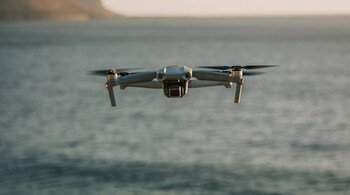
Hybrid terrestrial and satellite connectivity-capable drone technologies are required to counter problems of loss of connectivity when unmanned aerial vehicles conduct operations that are beyond the line of sight (BVLOS), experts said.
Dr Arunprakash Jayaprakash of Satellite Application Catapult said this while speaking at a panel titled 'Talking to Machines - Satellites for IoT, Drone and Autonomous vehicles" at the India Space Congress in New Delhi on October 26.
Satellite Application Catapault is a United Kingdom-based body that works on the growth of satellite applications and aims to contribute to the UK capturing a 10 percent share of the global space market by 2030.
Jayaprakash explained that BVLOS operations are necessary for e-commerce deliveries and so on. He explained that drones, which often leverage connectivity such as 3G, 4G and so on, can lose connectivity if, for example, it flies over a water body.
Jayaprakash said drones need to be made capable so that they can leverage both mobile and satellite connectivity.
However, he explained that attaching satellite terminals to drones could also increase their weight and thus affect their payload-carrying capability. In this regard, he said that small compact terminals were required.
Earlier Moneycontrol reported how during the Medicine in the Sky project held in Telangana last year, a drone experienced a loss of connectivity for around 20 minutes during the pilot project.
Medicine In the Sky was a massive pilot project that was taken up in 2021 to gauge the viability of delivering vaccines and medicines by drones in the Vikarabad district of Telangana.
Others present in the panel were Pradyumna Vyshnav from Mach33 Aero, and DS Govindarajan, president of Aniara Space.
Discover the latest Business News, Sensex, and Nifty updates. Obtain Personal Finance insights, tax queries, and expert opinions on Moneycontrol or download the Moneycontrol App to stay updated!





