

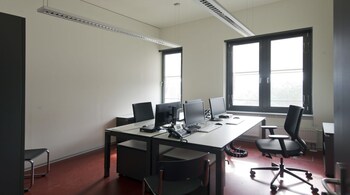
How will office life be different in a pandemic?
The office you once knew is likely to look vastly different.
Companies are taking a variety of steps to keep people a safe distance apart, such as using staggered shifts or asking people to come in on alternating days. Cubicles may also have higher walls or there may be new partitions between desks for added protection.
Kitchens, conference rooms and other common areas may be closed, and some offices have implemented one-way paths to keep people from passing each other. For essential shared spaces like elevators and bathrooms, face coverings could be required and there may be more frequent cleanings and limits on how many people can enter at one time. That could mean longer waits to use them.
Even with such social distancing measures, expect to wear a mask, especially when you’re not at your desk. Your company will also likely ask you to report if you are having any symptoms.
The U.S. Centers for Disease Control and Prevention offers guidelines on keeping offices safe. But the specific measures at your office will vary depending on the company and any local rules. In the latest phase of New York state's reopening plan, for example, office capacity is capped at 50 percent.
The pandemic may also prompt changes that aren’t directly about safety. At Bergmeyer, a design firm in Boston, the lights were adjusted to make Zoom calls look better.
Follow our full coverage of the coronavirus pandemic here.
Discover the latest Business News, Sensex, and Nifty updates. Obtain Personal Finance insights, tax queries, and expert opinions on Moneycontrol or download the Moneycontrol App to stay updated!





