

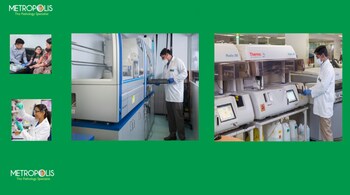
Metropolis Healthcare, one of India’s largest diagnostic chains, will sustain or even outperform FY21 EBITDA margins in the current fiscal year, Managing Director Ameera Shah told Moneycontrol in an interview.
The EBITDA margin in FY21 stood at 30.2 percent, and was 32.3 percent in Q1FY22.
Shah said while revenues from COVID-19 testing are declining, she expects other tests to drive growth in the remainder of FY22. COVID-19 testing, especially RT-PCR tests, have contributed about 19 percent to the total quarterly revenue in Q1FY22.
"When the COVID comes, non-COVID testing takes a little bit of a backseat. So even if you look at this quarter or July or August, we are seeing non-COVID testing increasing. Now it all depends on the third wave. If the third-wave comes in September. Then, obviously, it will affect non-COVID testing. If the third wave does not come in September then, of course, the non-COVID testing will be much stronger," Shah said.
Metropolis posted strong numbers Q1FY22 largely aided by COVID-19 testing and normalcy returning for other tests. Revenues more than doubled year-on-year to Rs 326.8 crore. The net profit was at Rs 75 crore in Q1FY22 compared to Rs 3 crore in the same period of previous year. While Metropolis benefited on a low base last year, it has been able to report 12 percent growth on a QoQ basis. Covid testing now constitutes 19 percent of total revenues.
It isn't just Metropolis; most hospital chains, pharma companies and diagnostic firms have seen record growth in Q1FY22 benefited by COVID-19 second wave that swept the country.
"COVID-19 second wave was very bad and obviously there was some dent in the non covid testing, but not very significantly. Overall I think we've done well. Volumes have gone up, our revenue per patient has gone up," Shah said.
Expansion plans
Shah said the company planned to expand testing capacity by 30-35 percent across its existing network including one global and 13 regional reference labs, 90 testing laboratories and 1,800 collection centres currently underway. This will be done in the next three years with a capex investment of Rs 35 crore.
Metropolis is a zero-debt company with growing cash and cash equivalents year on year basis. Cash and Cash Equivalents as on March 2021 stood at Rs 428 crores.
Shah has indicated that the company was scouting for selective buyouts of pathology labs to expand further in regions where it is already present and fill the vacuum in states such Madhya Pradesh, Maharashtra, Gujarat, Uttar Pradesh, Orissa, Jharkhand, Telangana and Andhra Pradesh.
Discover the latest Business News, Sensex, and Nifty updates. Obtain Personal Finance insights, tax queries, and expert opinions on Moneycontrol or download the Moneycontrol App to stay updated!





