

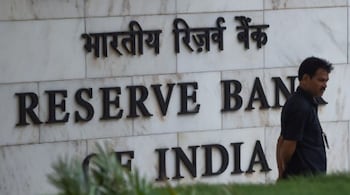
The Reserve Bank of India's Retail Direct scheme, launched a year ago to facilitate retail investment in government securities, is yet to strike a significant chord with individuals.
According to dealers, the slow response is because of a lack of awareness among investors.
According to RBI data, 69,536 people had registered in the Retail Direct scheme as of October 10, 2022, since its inception.
This number excludes 38,219 applications that had been withdrawn or rejected due to non-completion of the account opening process. The total number of accounts opened was 56,714.
As of October 10, the total Primary Market Subscription reached Rs 681.82 crore, of which Rs 233.86 crore was in Central Government Dated Securities, Rs 103.97 crore in State Development Loans, Rs 301.12 crore in Treasury Bills and Rs 42.87 crore in Sovereign Gold Bonds.
How does it work?
The RBI Retail Direct scheme was meant to be a one-stop solution to facilitate investment in government securities by individual investors. Retail investors can open and maintain a Retail Direct Gilt Account (RDG Account) with RBI and trade in these securities.
Individual investors were able to use the RDG Account
To invest in Treasury bills, coupon-bearing government bonds and State Development Loans through primary and secondary market transactions besides buying sovereign gold bonds. The online registration process was user-friendly with a video KYC (know your customer) facility.
Dealers said a lot can be done to improve retail participation.
"Even though RBI Retail Direct scheme has been a slow starter, it has now started attracting various investment communities mainly through word-of-mouth rather than any visible publicity about this portal," said Venkatakrishnan Srinivasan, founder, and managing partner of Rockfort Fincorp, a Mumbai-based debt advisory firm.
Ankit Gupta, the founder of BondsIndia.com, an online bond investment platform, said the RBI had done a "pretty good job" since the scheme’s launch.
"There has been a lot of traction in terms of the number of clients who have registered out there, but having said that, there is a lot that can be done because obviously there are standard requirements which a client needs to fulfil," Gupta said.
The client has to understand the product and then go ahead with buying it, he added.
RBI push
The central bank wants to bring government securities within easy reach of the common man to facilitate investment by retail investors. The scheme was launched on November 12, 2021.
"Investors are happy and find it good and it is the most trusted platform...But it has a few demerits like liquidity," said Umesh Kumar Tulsyan, managing director of Sovereign Global Markets, a New Delhi-based fund house.
Even so, many high net-worth individuals and retail financial investors have started enquiring about the portal and showing keen interest to get on board, which is a good sign, said Srinivasan.
Also read: Benchmark bond yields ease as crude oil prices extend losses
Why registrations are so few
Although the scheme has been completed almost one year since its launch, the number of registrations on the platform are less compared to some private bond trading platforms, dealers said.
Market experts attribute it to a lack of awareness and understanding of the fixed-income market and the portal among retail investors.
Some experts said the central bank had not promoted the portal sufficiently.
"Knowledge about the fixed-income instruments is still less, so investors who need the guidance are still hesitating to invest through the scheme," Tulsyan said.
Experts consider the portal beneficial for retail investors especially when yields on bonds and other debt securities are rising compared to the returns on traditional investment tools such as bank fixed deposits.
On October 14, the 10-year G-Sec benchmark was trading at 7.45% levels, around 100 basis points higher than what bank fixed deposits are paying. One basis point is one-hundredth of a percentage point.
"So it is not about the trust, it is more about the lack of knowledge, lack of education, and lack of understanding. It is for these reasons that investors go to their wealth managers or brokers. If the investors are educated properly, they would prefer investing on the RBI platform independently instead of going to wealth managers or brokers," Gupta added.
Also read: Treasury bill cut-off yields rise sharply on tight liquidity conditions
Growth and expansion
Money market dealers said it may be an opportune time for retail investors to invest through the portal. At least they can divert some portion of their investment to the portal and hold it until maturity.
Gupta said that investor awareness programs and education sessions will help potential retail investors understand the working of the RBI platform, products, and processes.
But to make the platform more popular, the process needs to be eased so that even a less educated investor or layman can also look at investing in it instead of parking his or her money in fixed deposits, Gupta added.
Discover the latest Business News, Sensex, and Nifty updates. Obtain Personal Finance insights, tax queries, and expert opinions on Moneycontrol or download the Moneycontrol App to stay updated!





