

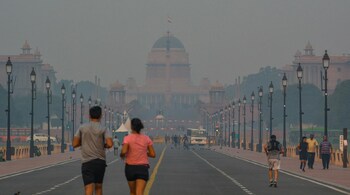
Exposure to indoor and outdoor air pollution are among the known risk factors for respiratory diseases, including chronic obstructive pulmonary disease (CoPD) — one of the Top 5 causes of death in India, according to the World Health Organization (WHO).
Typically thought of as a disease of smokers and lower-income households in crowded urban centres, CoPD incidence and burden patterns are slowly shifting. To be sure, tobacco use and burning inefficient biomass fuels indoors are still the key risk factor for chronic respiratory diseases like CoPD in India and cessation of smoking and use of cleaner chulhas are among the key management protocols for the disease. But there's more to disease prevention and early diagnosis.
"Traditionally, CoPD has been seen as a disease of men over 40 who smoke. In India, that pattern is changing. Recent reports show that CoPD is increasingly being detected in younger adults between 18 to 49 years of age. Men still have higher rates overall due to tobacco use, but women are also affected due to long-term biomass smoke exposure. The burden is higher in the northern and eastern states which have dense populations with extreme air pollution. Urban centres now report rising cases in younger adults, driven by smoking and ambient as well as industrial pollution," Jayalakshmi TK, senior consultant, pulmonology, Apollo Hospitals, Navi Mumbai, said over email.
CoPD is a condition in which either the airways in the lungs (bronchi) or the tiny air sacs in the lungs (alveoli) become inflamed and damaged, leading to obstruction of air flow. CoPD is a progressive disease, and while there's no cure for it currently, it is possible to reduce symptoms and slow its progress with a combination of medicineS and lifestyle changes. Chronic bronchitis and emphysema are both types of CoPD. WHO data show that in 2021 the progressive lung disease accounted for 75 deaths per 100,000 population among females and 66.1 deaths per 100,000 for males in the country.
On December 9, Moneycontrol reported that "the anti-asthma and COPD segment grew 10 percent year-on-year in November, outpacing historical winter trends and marking its strongest performance for the month since 2022".
"COPD is as serious as heart disease or stroke considering its burden of years of healthy life loss or ‘disability-adjusted life years,’ in general population," Dr Salil Bendre, director-pulmonology, Nanavati Max Super Speciality Hospital, Mumbai, said in an email interview. "Despite a high prevalence rate, individuals can prevent CoPD with simple lifestyle modifications. Never smoke and quit if you are a smoker right now. Use masks in public areas to reduce exposure to outdoor smoke. CoPD can be detected early with spirometry. It can also be managed effectively with inhaled medicines and pulmonary rehabilitation, alongside exercises. Be aware about the triggers to reduce the flare-ups and avoid hospitalisations. Consult with a pulmonologist immediately for persistent cough, phlegm or breathlessness."
"Non communicable diseases, including CoPD, dominate the list of leading causes of early death and disability, especially in low and middle-income regions. The Global Burden of Disease study confirms the position of COPD as the third leading cause of death going up from the fourth position in the previous report. In India, there are an estimated 37.8 million cases of CoPD, contributing to 17.8 percent of the global burden of CoPD and 27.3 percent of the global CoPD deaths. CoPD is now added to the National Programme for Prevention and Control of Cancer, Diabetes, Cardiovascular Diseases and Stroke (NPCDCS) program," Dr Jayalakshmi TK said.
In 2023, peer-reviewed journal 'The Lancet' shared findings from the Global Burden of Diseases 2019 study, showing that over 450 million people had chronic respiratory diseases (CRDs) worldwide, and CoPD caused more than 3.3 million of the 4 million deaths from CRDs in 2019. In 2021, 'Lung India', the journal of the Indian Chest Society, published a meta-analysis of eight studies and found that "the estimated prevalence (of CoPD in India) was 7.4 percent (95 percent confidence interval: 5.0–9.8 percent)." Titled "Prevalence of chronic obstructive pulmonary disease in India: A systematic review and meta-analysis", the study of studies had a "pooled sample of 8,569 individuals".
While there is no cure for CoPD currently, the condition can be managed. "The cost driver in treatment of COPD is not one single procedure but lifelong treatment," said Dr Jayalakshmi TK. "Inhalers containing long-acting bronchodilators and inhaled steroids can cost from a few hundred to a few thousand rupees per month in the private sector, and patients often need more than one device. Hospitalisation for severe aggravation adds more burden. A study in public hospitals published in 2014 showed that CoPD has a substantial impact on health-care costs particularly for hospitalization. The direct costs ranged from Rs.1103 to Rs.6945 per month. The costs are undoubtedly higher today. Public hospitals and government schemes do offer free or subsidised inhalers and oxygen, but follow up care is often neglected by the patients. Advanced treatment for emphysema, such as bronchoscopic lung volume reduction valves or coils and lung volume reduction surgery, are available only in a handful of tertiary centres and are priced in lakhs, placing them beyond the reach of most patients," she added.
Dr Jayalakshmi TK said that while indoor pollution from burning biomass fuels is slowly declining, thanks to schemes for making cleaner cooking gas available to more households across India, "outdoor air pollution, notably fine particulate matter from traffic, industry and crop burning in winters in the north of the country, is also contributing to the lung damage over time. Occupational exposures in mining, construction and small industries, along with post tuberculosis lung damage and early life undernutrition, add to risk. Low awareness and limited access to spirometry mean COPD is often diagnosed late, when symptoms are advanced and irreversible."
Dr Bendre explained that the disease "incidence rate is relatively higher in India due to the different types of active and passive smoking like cigarettes, bidis, traditional and modern versions of hookahs, the decades long practice of cooking over wood, dung and crop waste in poorly ventilated kitchens, largescale burning of garbage or crops and rapidly rising outdoor air pollution due to industrialisation and vehicular combustion. For decades, these risk factors have been injuring the airways from adulthood onwards, making COPD common in Indian cities and villages. Today, India contributes to a substantial share of the world’s COPD cases and deaths. People from lower socioeconomic strata do bear a heavier burden of COPD due to crowded and crammed residential areas, biomass cooking and hazardous jobs. However, COPD is not limited to the poor and every smoker or those with long-term exposure to air-pollution is at risk."
Once contracted, the disease requires lifelong management. But there are ways to try and prevent CoPD, explained Dr Bendre. "Despite a high prevalence rate, individuals can prevent COPD with simple lifestyle modifications. Never smoke and quit if you are a smoker right now. Use masks in public areas to reduce exposure to outdoor smoke. COPD can be detected early with spirometry. It can also be managed effectively with inhaled medicines and pulmonary rehabilitation, alongside exercises. Be aware about the triggers to reduce the flare-ups and avoid hospitalisations. Consult with a pulmonologist immediately for persistent cough, phlegm or breathlessness."
"For the average person, the single most important step is to avoid smoke in all forms. This means not starting to smoke, quitting completely if you already smoke and protecting yourself from second hand smoke at home and work. Use of clean cooking fuel and good kitchen ventilation is important. Women must reduce use of wood, dung or crop waste. Reducing exposure to outdoor pollution by avoiding peak traffic hours, using masks on high pollution days and supporting cleaner energy policies also matters," Dr Jayalakshmi TK said.
Given the global spread and disease burden of CoPD, there is promising ongoing research in the field. Dr Jayalakhsmi TK cites the example of "single inhaler triple therapy that combines an inhaled steroid, a long-acting beta agonist and a long-acting muscarinic antagonist (for opening the airways)" which has "shown better control of symptoms and fewer exacerbations than dual therapy in large trials, and may be an important option for high-risk patients. New drugs are being studied to reduce aggravation of symptoms in patients with chronic bronchitis and frequent flare ups. For advanced emphysema, bronchoscopic lung volume reduction using endobronchial valves or coils is emerging as a less invasive alternative to surgery. Remote spirometry and biomarker based personalised therapy are also coming up to diagnose and manage CoPD."
Discover the latest Business News, Sensex, and Nifty updates. Obtain Personal Finance insights, tax queries, and expert opinions on Moneycontrol or download the Moneycontrol App to stay updated!





