

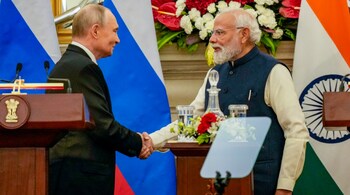
India sent a sharp message to Pakistan on Thursday as Prime Minister Narendra Modi stood beside Russian President Vladimir Putin and called for united global action against terrorism. His remarks came just hours after Pakistan concentrated unprecedented military power in the hands of Field Marshal Asim Munir, appointing him as the country’s first Chief of Defence Forces (CDF) alongside his existing role as Army Chief. In New Delhi’s diplomatic language, the timing was no coincidence.
Speaking at a joint press conference with Putin, PM Modi said India and Russia had “long been standing shoulder to shoulder in the fight against terrorism,” and then linked two major attacks separated by geography but not by ideology. “Whether it is the terrorist attack in Pahalgam or the cowardly attack on the Crocus City Hall, the root of all these incidents is the same,” he said.
The reference to Pahalgam terror attack points squarely to terror networks long enabled by Pakistan’s deep state. By drawing a parallel with the Moscow concert hall massacre, Modi reinforced that the same ecosystem feeds violence from South Asia to Europe. “India’s unwavering belief is that terrorism is a direct assault on the values of humanity and that global unity against it is our greatest strength,” he added.
At a moment when Pakistan is reshaping its military power structure by giving Asim Munir control over the army, navy and air force, Modi’s comments read as a clear strategic warning. Munir, known for his hardline stance and public railing against India, has now gained more influence than any military leader in Pakistan’s history. His elevation gives one individual command over Pakistan’s nuclear posture, defence policy and internal security operations, with little civilian oversight.
For India, this creates a more unpredictable neighbour led by a leader who has repeatedly used religious rhetoric and nuclear threats while speaking about Kashmir. Former Indian intelligence officers have described Munir as an “aggressive institutional nationalist” who sees India not just as an adversary but as an ideological target. With his new consolidated authority, Islamabad’s military decisions could tilt toward escalation rather than diplomacy.
Against this backdrop, Modi’s joint stand with Putin is not merely symbolism. Russia remains one of India’s key defence partners and a permanent member of the UN Security Council. By publicly aligning India’s anti-terrorism stance with Moscow, Delhi is signalling that it will not tolerate attempts by Pakistan’s new power structure to revive proxy terror or expand hybrid warfare under Munir’s command.
Modi also highlighted India’s growing strategic coordination with Russia in global forums, noting that both countries “will continue our dialogue and cooperation” within the UN, G20, BRICS, SCO and other platforms. This diplomatic layering has its own message: if Pakistan’s new military leadership attempts escalation, India will seek international alignment against terror networks, not isolated responses.
In a single sentence linking Pahalgam and Moscow, Modi made India’s stance unmistakably clear. As Pakistan hands sweeping power to a hardline general, New Delhi is preparing its response, not with panic, but with partnerships, clarity and global messaging.
Discover the latest Business News, Sensex, and Nifty updates. Obtain Personal Finance insights, tax queries, and expert opinions on Moneycontrol or download the Moneycontrol App to stay updated!





