

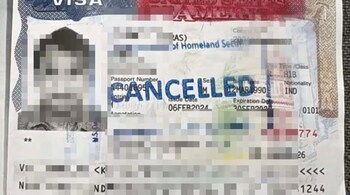
The Trump administration is preparing to keep foreign fact-checkers and online moderation staff out of the United States, turning a long-running political grievance about “censorship” into formal visa policy. A leaked US State Department memo shows consular officers will now be asked to treat work in these fields as a potential ground for refusal.
According to the directive, issued on December 2 and circulated to US embassies and consulates, visa officers must deny entry to applicants, including H-1B tech workers, journalists and online moderators, who are judged to have been “responsible for, or complicit in, censorship or attempted censorship of protected expression in the United States.”
The memo instructs officials to go beyond routine background checks and dig into applicants’ professional histories, LinkedIn pages and public social-media posts. Anyone who has served in trust and safety, misinformation or disinformation teams, compliance, online-safety functions or dedicated fact-checking roles, even at large global platforms, could find their applications delayed or rejected outright.
Supporters of the move claim it protects free speech by keeping “censors” from influencing the American information space. But civil-liberties groups, technology companies and many policy experts say the administration is deliberately blurring the line between political disagreement and genuine online-safety work. For most platforms, they argue, content moderation is used to tackle threats such as incitement to violence, coordinated harassment or organised disinformation, not to silence legitimate opinions.
India is expected to feel the impact sharply, given that a large share of H-1B applicants and outsourced moderation teams are based there. Professionals working for tech firms, newsrooms or third-party contractors in fact-checking or moderation roles could now be treated as suspect, even when their work never touched US-focused content.
Lawyers warn that vague terms like “censorship” and “protected expression” leave enormous room for interpretation at consulates. That uncertainty may fuel arbitrary decisions, deter qualified applicants from applying in the first place and deepen skills shortages in industries that rely heavily on international talent.
By recasting fact-checking and moderation as tools of censorship, the Trump administration is not just rewriting the politics of online speech, but also reshaping who is allowed to participate in America’s digital economy.
Discover the latest Business News, Sensex, and Nifty updates. Obtain Personal Finance insights, tax queries, and expert opinions on Moneycontrol or download the Moneycontrol App to stay updated!





