

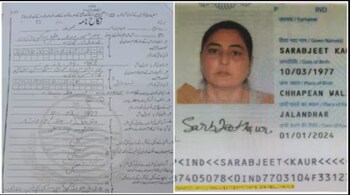
Indian Sikh woman Sarbjeet (Sarabjit) Kaur, who travelled to Pakistan as part of a Sikh jatha for Gurupurab celebrations under a bilateral pilgrimage arrangement, went missing during the visit and did not return with the group on November 13.
A nikahnama that has emerged indicates she converted to Islam, taking the name Noor Hussain, and married a Pakistani man, Nasir Hussain, in Sheikhupura. The document, issued by a local mosque, records her supposed consent, though intelligence officials say they doubt this version.
Sarabjit Kaur, 52, a resident of Kapurthala in Punjab, travelled to Pakistan on November 4 as part of a 1,992-member Sikh jatha visiting gurdwaras for Guru Nanak Dev’s 555th Prakash Parv under a bilateral pilgrimage arrangement. While the group returned to India on November 13 after the 10-day visit, Kaur did not come back.
Her disappearance has raised concern within India’s security establishment, which believes the case reflects a recurring pattern of “pilgrim recruitment” allegedly linked to Pakistan’s intelligence network. Agencies say such efforts typically involve identifying vulnerable visitors during organised shrine visits and influencing them through emotional grooming, religious pressure, and coerced marriage.
“This is not a case of individual choice. This is part of a recurring pattern of targeted recruitment under the guise of marriage and conversion,” a senior intelligence official told CNN-News18, describing it as “a sophisticated soft-power penetration model” attributed to Pakistan’s ISI.
Officials say these tactics are often carried out in controlled environments such as guesthouses and shrines, where local handlers and intermediaries closely monitor visiting pilgrims. The aim, they say, is to cultivate dependency before pushing individuals into marriage and relocation within Pakistan.
“This dual process of conversion and marriage is Pakistan’s way of manufacturing social capital; it allows them to create loyal assets who can later be deployed for propaganda, information, or psychological leverage,” another official said.
Kaur, who was divorced and is the mother of two sons, had travelled under the annual pilgrimage arrangement despite earlier security concerns flagged by Indian authorities. Immigration records show no exit in her name, prompting immediate alerts to Punjab Police and central agencies. The Indian mission in Pakistan has also sought information from local authorities, according to government sources quoted by IANS.
The SGPC has confirmed that Kaur was part of the jatha but has yet to issue a detailed statement. Security officials say her case reflects what they view as Pakistan’s evolving intelligence strategy, shifting from traditional espionage to embedding Indian citizens within Pakistani communities through conversion and marriage to build long-term influence.
Discover the latest Business News, Sensex, and Nifty updates. Obtain Personal Finance insights, tax queries, and expert opinions on Moneycontrol or download the Moneycontrol App to stay updated!





