

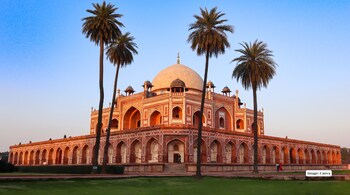
The Tomb of Humayun is an impressive architectural masterwork situated in the centre of Delhi, and it is where the Mughal glory in India began. Constructed in the middle of the 16th century, this World Heritage site, which is also serving as the tomb of Emperor Humayun, is not only the resting place of the emperor but also a universal representation of the Persian art that perfectly blends with the Indian art.
The tomb was built on the commission of Empress Bega Begum, who was the chief consort of Humayun and was designed by Persian architect Mirak Mirza Ghiyas in 1569. It marked the first garden-tomb on the Indian subcontinent, which would become a model of Mughal architecture to come, with the most famous Taj Mahal being built almost a hundred years later.
The design of the tomb has adopted the charbagh pattern, rn which is a Persian idea whereby the garden is separated into four quadrants by water channels, which represent paradise. The edifice is made of red sandstone with white marble domes and elaborate lattice work, and it oozes with ideal symmetry and divine harmony, which are characteristic of the Mughal structures.
Around the complex of tombs, there are a few other smaller monuments, such as the tomb of Isa Khana, the tomb of Afsarwala and the tomb of Barber, which provide more historical layers. Each of the structures provides us with an understanding of the changing architecture and funerary customs of the Mughal period.
Besides the architectural importance, the Tomb of Humayun is full of emotional attachment to Indian history. The dynasty fell in 1857, but before, it was used as a haven by the final Mughal emperor, Bahadur Shah Zafar, who took refuge there during the 1857 revolt. The site, therefore, marks the fall and the rise of the empire, being a symbol of glory and nostalgia.
Over the last decades, the Archaeological Survey of India (ASI) and the Aga Khan Trust of Culture have carefully restored the complex, reconstructed its gardens, water canals and detailed accents. It is now a heritage museum of its own, and it receives a variety of visitors, including historians, architects, and tourists.
A visit to the Tomb of Humayun is not just a sightseeing experience of fine architecture, but a serene experience in the midst of the city of Delhi. The light playing on the red sandstone, the smell of flowers, and the silent murmur of the past and the present all combine to make it a classic place where art, culture and heritage collide.
Discover the latest Business News, Sensex, and Nifty updates. Obtain Personal Finance insights, tax queries, and expert opinions on Moneycontrol or download the Moneycontrol App to stay updated!





