

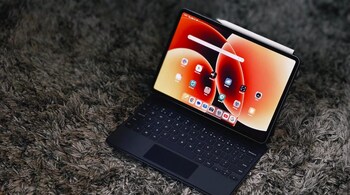


For years, Android tablets have lived in the shadow of the iPad — a bit like Luigi standing next to Mario. No matter how capable they became, Apple’s tablet dominated mindshare, apps and premium positioning. But over the past couple of years, that dynamic has started to shift. Better hardware, stronger software optimisation and more serious productivity features are slowly giving Android tablets a clearer identity of their own — and buyers are beginning to notice.
The Xiaomi Pad 8 arrives with fairly clear expectations. The previous generation became one of the easiest Android tablets to recommend because it balanced performance, display quality and build surprisingly well for the price.
That also means this model has bigger shoes to fill.
On paper, the Pad 8 looks like a straightforward upgrade. It brings a faster Snapdragon processor, a sharper display and stronger support for accessories that push the tablet closer to being a proper productivity device. At the same time, the starting price of Rs 33,999 means it is no longer quite as aggressively positioned as its predecessor.
After spending time with the device, though, it is clear Xiaomi has largely kept the value equation intact.
Xiaomi Pad 8 review: Design and build
The Pad 8 immediately feels premium in the hand. Xiaomi has used a full metal chassis, and the build quality is excellent. At 5.75mm thick and about 485 grams, the tablet strikes a comfortable balance between slimness and usability. Larger tablets can feel unwieldy after a while, but the Pad 8 remains easy to hold for reading, browsing or watching videos.
The design is mostly clean, though the rear camera module looks slightly awkward on the otherwise minimalist back. Xiaomi has also placed pogo pins on the rear for accessories like the keyboard, which may look unusual at first but work as intended. The tablet includes a USB-C port with USB 3.1 speeds, which is welcome at this price, and Xiaomi has kept the IR blaster, allowing the device to double as a remote for appliances or TVs. There are some compromises. There is no fingerprint scanner, and the model I tested does not include cellular connectivity, meaning no SIM slot or expandable storage.
The 11.2-inch display is one of the tablet’s biggest strengths. With a resolution of 3200 × 2136, text and images look extremely sharp. Xiaomi has opted for a 3:2 aspect ratio, which makes the screen slightly squarer than typical tablets. In practice, that works well for productivity tasks like editing documents or browsing spreadsheets because you get more vertical space.
Although the panel is an IPS LCD, Xiaomi has packed in features including 144Hz refresh rate, 12-bit colour, DCI-P3 support and Dolby Vision compatibility. In everyday use the display looks vibrant and detailed, even if it cannot match OLED panels for deep blacks. Brightness peaks at about 800 nits, which proved sufficient for both indoor and outdoor use. The quad-speaker setup with Dolby Atmos also performs well, delivering enough volume for movies and gaming, though the sound lacks the richness of some higher-end tablets.
Xiaomi Pad 8 review: Cameras, accessories
The cameras are predictable tablet fare. The 13MP rear sensor works well enough for scanning documents or capturing quick photos, but it is not something you will rely on often. The 8MP front camera is more relevant for daily use, especially with Xiaomi’s FocusFrame feature, which keeps you centred during video calls.
Where Xiaomi is clearly pushing the Pad 8 further is with accessories. The Focus Keyboard attaches magnetically and uses a floating design similar to Apple’s Magic Keyboard, effectively turning the tablet into a compact laptop-style setup. It connects instantly through pogo pins and includes backlit keys, though the layout feels a little cramped and the Enter key is unusually small. The Focus Pen Pro is the more versatile addition. The stylus feels responsive, with low latency and solid pressure sensitivity, making note-taking and sketching feel natural on the display.
Xiaomi Pad 8 review: How it performs
Performance is easily one of the tablet’s strongest areas. The Pad 8 runs on Qualcomm’s Snapdragon 8s Gen 4, and in everyday use it feels extremely capable. During testing, Call of Duty: Mobile ran at 120FPS, while BGMI stayed around 90FPS during longer sessions. More importantly, the tablet remains consistently smooth during regular tasks such as app switching, downloading large files or exporting videos. Thermal performance also appears well managed, with the device staying comfortable even during extended gaming.
The tablet runs HyperOS 3 based on Android 16, and Xiaomi has done a reasonable job optimising the interface for a larger screen. Apps scale well, and multitasking feels natural thanks to features like Workstation Mode, which allows apps to run in resizable windows. Some visual elements still feel slightly dated, but the overall experience is stable and well suited to productivity. Xiaomi has also added several AI-powered tools under its HyperAI suite, including writing assistance, voice enhancement and live subtitles.
Battery life is another highlight. The 9,200mAh battery easily delivered close to two days of mixed usage during testing, which included browsing, streaming and occasional gaming. Charging tops out at 45W, and the tablet also supports reverse wired charging, letting it top up smaller devices like earbuds when needed.
Xiaomi Pad 8 review: Should you buy it?
Taken together, the Xiaomi Pad 8 feels like a tablet that focuses on getting the basics right. It is fast, well built, and backed by a sharp display and dependable battery life. At Rs 33,999, it may not feel quite as aggressively priced as its predecessor once did, but it still offers a strong mix of performance and features for the money.
For anyone looking for a powerful Android tablet that can handle both entertainment and productivity without venturing into flagship pricing territory, the Pad 8 remains a very convincing option.
Discover the latest Business News, Sensex, and Nifty updates. Obtain Personal Finance insights, tax queries, and expert opinions on Moneycontrol or download the Moneycontrol App to stay updated!





