

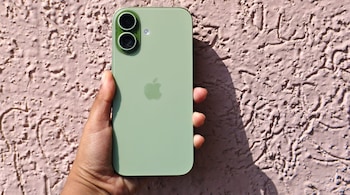
2025 is turning out to be the year of Wi-Fi upgrades, and Apple seems to be in the spotlight with its new iPhone 17 lineup. According to fresh data from Ookla’s Speedtest Intelligence, Apple’s first in-house wireless chip, called the N1, is delivering a major jump in real-world Wi-Fi performance. This puts the latest iPhones ahead of several top Android flagships, even though many of those devices support more advanced Wi-Fi 7 features on paper.
The N1 chip powers the entire iPhone 17 family. This includes the iPhone Air, iPhone 17, iPhone 17 Pro and iPhone 17 Pro Max. While the earlier iPhone 16 models used Broadcom’s Wi-Fi hardware, Apple has now brought networking fully in-house. This shift allows Apple to control more of the hardware and software stack, improving consistency and reducing reliance on suppliers.
Ookla examined global, crowdsourced speed test data collected during the first six weeks after the iPhone 17 went on sale. The results show a clear jump in Wi-Fi speeds. Across all major regions, download and upload speeds on the N1-powered iPhones were up to 40 percent higher than those of the iPhone 16 family. The difference is most visible in tough Wi-Fi conditions. At the 10th percentile, which represents slower and congested networks, the iPhone 17 family showed much stronger performance. This indicates that Apple’s new chip improves everyday reliability, not just peak speeds.
Interestingly, Apple’s improvements come despite the fact that the N1 chip does not support 320 MHz channels, which are a major selling point of Wi-Fi 7. These wider channels are available only on certain routers and in certain regions. Since real-world adoption of such routers is still low, the lack of 320 MHz support does not hold Apple back yet. In markets like North America, where 6 GHz networks are more widely used, the iPhone 17 still delivered the highest median download speeds among all devices tested.
On the Android side, the Google Pixel 10 Pro family briefly takes the lead in global median download speeds, reaching 335.33 Mbps, slightly above the iPhone 17’s 329.56 Mbps. Xiaomi’s 15T Pro, powered by MediaTek’s Wi-Fi solution, dominates upload speeds and latency. Samsung’s Galaxy S25 lineup performs reliably well overall and shows the lowest latency in several regions.
Huawei’s Pura 80 family, which does not support 6 GHz Wi-Fi, trails behind other premium devices in peak performance. However, it still performs competitively on older Wi-Fi bands and delivers strong upload speeds in markets where 6 GHz networks are not common.
Overall, Ookla’s data highlights a major shift. Wi-Fi performance has quietly become a top differentiator in flagship phones. Apple’s N1 chip shows that deep hardware and software integration can deliver stronger real-world results, even without chasing the highest theoretical speeds. As Wi-Fi 7 and 6 GHz networks expand, competition between Apple, Google, Samsung and Xiaomi is only going to intensify.
Discover the latest Business News, Sensex, and Nifty updates. Obtain Personal Finance insights, tax queries, and expert opinions on Moneycontrol or download the Moneycontrol App to stay updated!





