

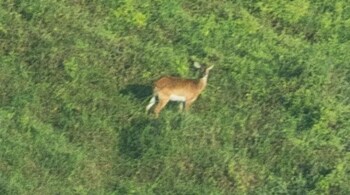
Scientists now have new hope for the survival of a rare African antelope after a brief encounter. A lone Upemba lechwe finally stopped long enough to be photographed after years of seeking, providing a unique look at a species that is in danger of going extinct. This brief encounter could be crucial in efforts to protect one of the continent’s most endangered large mammals.
Fewer than 100 Upemba lechwe are thought to remain in the wild. During an aerial survey of the Kamalondo depression in southern Democratic Republic of the Congo, researchers recorded only 10 individuals. Most of the herd vanished too quickly to be captured on camera, but one antelope stopped for just a few seconds, allowing Manuel Weber, from Upemba National Park’s research department, to take what is believed to be the first photograph of a living Upemba lechwe since it was identified as a subspecies in 2005.
Read Also: SKUAST-Kashmir creates India’s first gene-edited sheep using CRISPR
The species faces a serious threat from illegal hunting, which has dramatically reduced its numbers. In the early 1970s, over 22,000 Upemba lechwe were counted before it was officially classified as a subspecies. By the 1990s, meat from dozens of these antelopes was being transported weekly to Bukama, the largest city in the region along the Lualaba River. Weber stressed that while hunting by local communities is understandable, it can only be sustainable if populations are viable. The question now is how to restore the numbers to safer levels before it is too late.
The photograph came after tense days of searching, with Weber admitting he barely slept, worried they would find none at all. He said the image is vital to raise awareness and attract support to save this “forgotten antelope.” The new findings, published in the African Journal of Ecology, mark the first population update in over 50 years. Weber and his team warn that without urgent protection, the Upemba lechwe will vanish forever. They hope this rare photo will become a symbol of hope and a call for immediate conservation efforts.
Discover the latest Business News, Sensex, and Nifty updates. Obtain Personal Finance insights, tax queries, and expert opinions on Moneycontrol or download the Moneycontrol App to stay updated!





